


When he has actually been fit and able to play, Reece James has been one of Chelsea’s standout performers since he was first incorporated into the first team. It was just a few years ago that many lauded him as the best right-back in the world. However, injuries have halted a lot of the positive momentum that he has built over those last few years and now he finds himself in a very awkward position. He doesn’t really have a full time position anymore, and to be frank, he is at risk of being phased out of this Chelsea team altogether. He may be a right-back by trade, but he has spent a lot of the last two seasons in central midfield, and has even found himself on the deepest line of defense, especially in possession. With Xabi Alonso’s appointment as Chelsea manager, and his implementation of a 3-4-3 formation, James’ future could become even more awkward.
What makes his situation awkward?
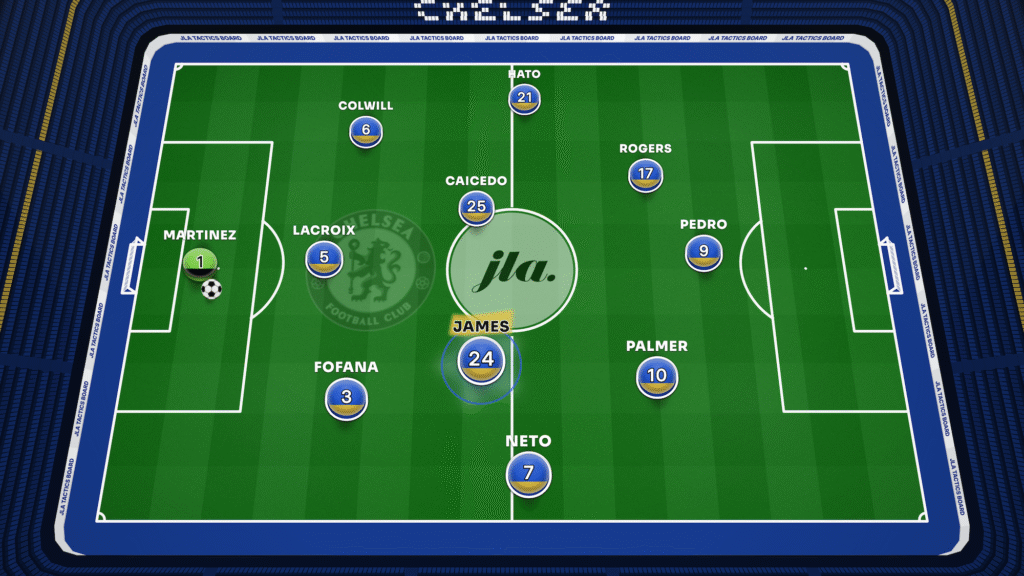
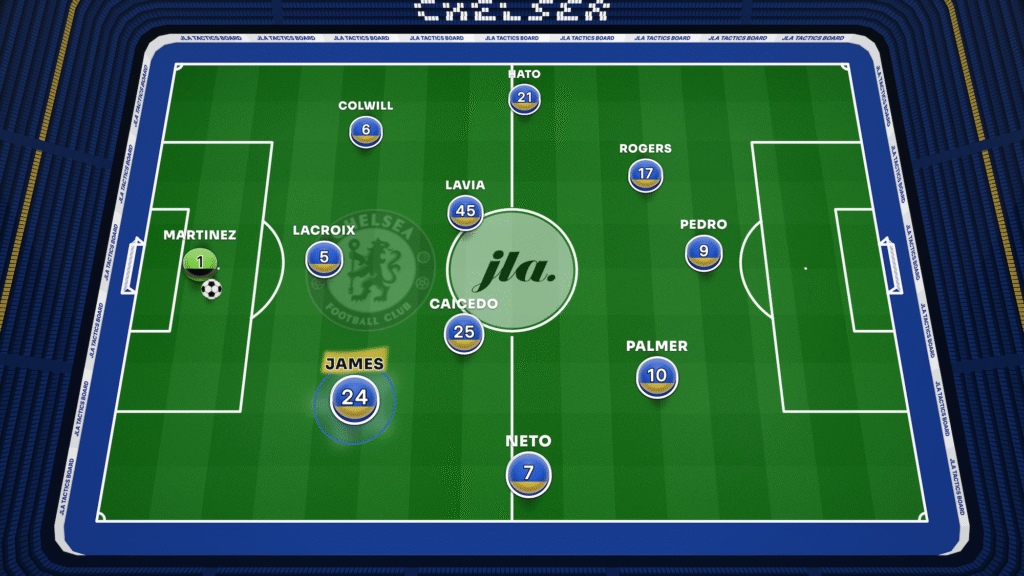
The main reason that James’s outlook is slightly bleak is that in Alonso’s typical Chelsea system, there are only three positions that James could realistically play, and none of them are particularly comfortable for him and where he is in his career. Those positions are right wingback, central midfield, and right centre-back.
But James is a right fullback, and a traditional one too. He may be best known for his qualities going forward, but he was always able to balance those forward-thinking gifts with a steady defensive presence at fullback. Alonso’s system doesn’t use traditional fullbacks and instead opts for wingbacks or even wide midfielders instead. So, in order for James to play regularly, he will have to play somewhere that isn’t natural for him.
The problem with James being used in these positions is that in each of them, he has large limitations that mean that he isn’t well suited to that role – especially with the way that Alonso has deployed players in these positions in the past.
But James is somewhat of a cult hero at Chelsea. He is a product of their academy, and now the club’s captain. Therefore, there seems to be some pressure but also desire to find a place for one of the only ‘proper Chels’ players left in the squad. Finding a balance between playing a player that means so much to the emotions of the club’s stakeholders and the needs of the team is something that Alonso will have to do quickly if he wants to find his winning formula soon.
In light of that desire many around the club have for James to play a prominent role in the team, I will continue as if he has to play. I reserve the right to return later to the idea that Chelsea might be better off without James playing at all, but for now I’ll assume the club’s desire to play him wins out.
Reece James as a central midfielder
Pros
James has been playing in midfield now for well over a year. Former Chelsea manager Enzo Maresca said in March 2025 that he ‘has seen Reece James as a midfielder since day one’. And ever since he first deployed James in midfield, he has spent the vast majority of his time there and been one of Chelsea’s better performers (even if the bar wasn’t very high).
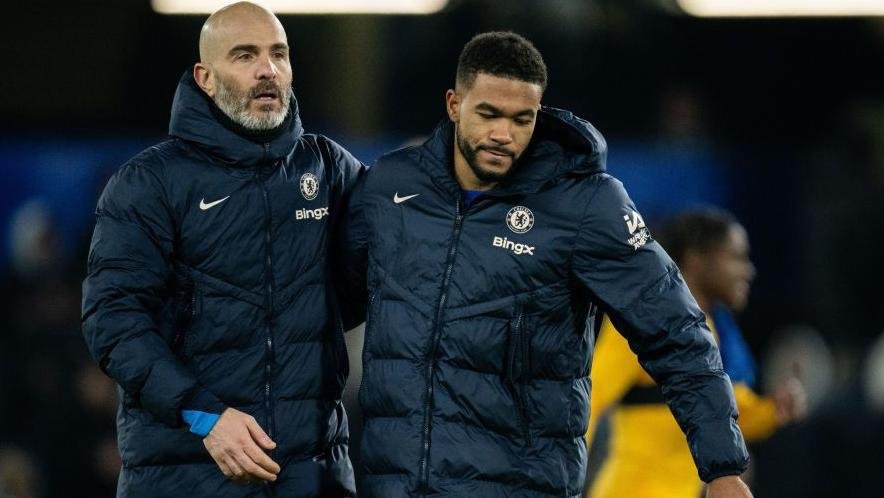
It’s easy to see why Maresca would have such a view of James. Since his first season in Chelsea’s first team in 2019/20, Reece James has established himself as one of the best passers of a football in the Premier League. His crossing had always been his standout quality, but his ability to progress the ball on the ground has also been one of his greatest attributes. Sure, he did the majority of his world-class work out at right back, but with the shifts in modern football and the courage managers now have to move players around based on their profiles rather than their natural positions, it wasn’t hard to envision James being an efficient midfielder.
Maresca found ways to platform James and his skills and it shows in his stats from last season. He was in the 70th percentile for progressive passes (3.44 per 90), and the 90th percentile for passes into the final third (4.59 per 90). But what went somewhat under the radar was how well his defensive qualities transitioned to the middle of the park (stats per ScoutLab).
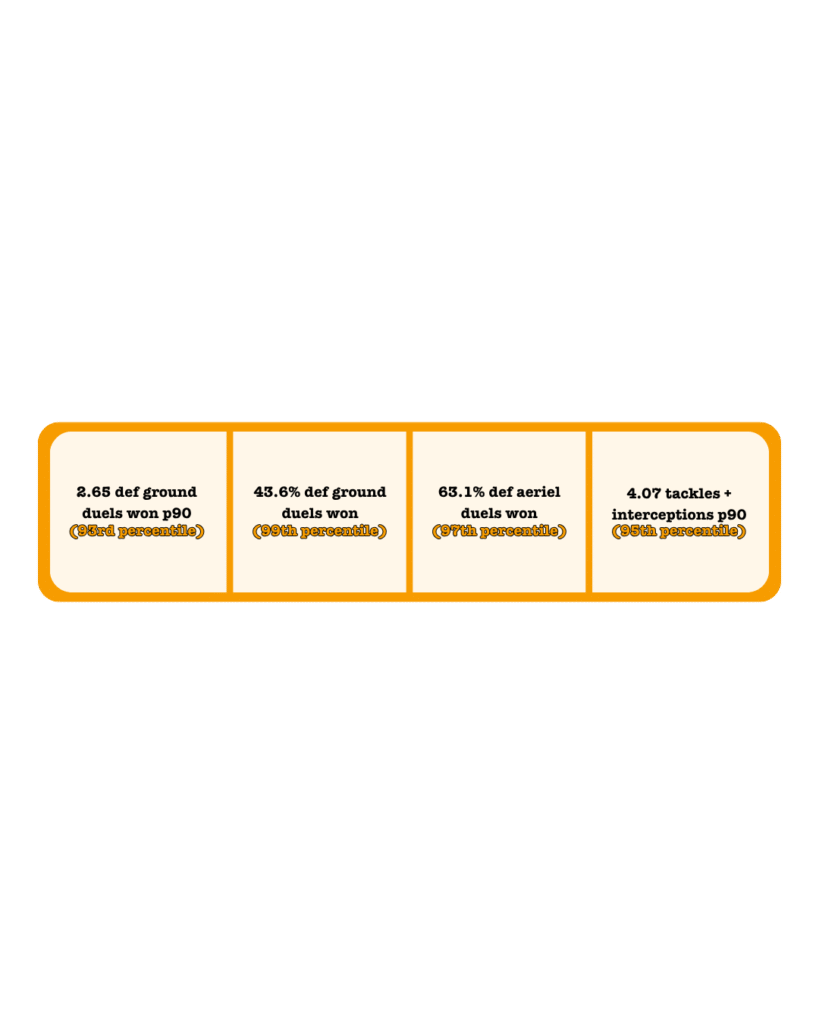
The above diagram shows just how effective he was defensively in midfield, giving reason to believe he is more than capable of continuing there under Alonso. In his 3-4-3 system at Bayer Leverkusen, progression and ball-winning were two of the most important attributes for his midfielders as it provided stability for an otherwise fluid but chaotic style of play.
Another added benefit of James’ long term future being in midfield is that it may prolong a career that may otherwise be derailed by injuries. With the more casual and slow pace he takes in midfield, James may find himself on the medical table far less. And with the fact that Alonso expects his wingbacks to be the relentless and powerful runners, this may be the best way for Chelsea to ensure that their captain is still able to play a prominent role in their future.
With the qualities he has on the ball and the fact that he now has over a year of experience playing the position in the Premier League, James being the long term partner to Moises Caicedo under Xabi Alonso is not only plausible, but arguably beneficial for both him and the team.
Cons
But playing Reece James in midfield has some clear, and in some ways crippling drawbacks. And they all stem from the fact that he isn’t a natural midfielder, and thus isn’t wired like one. And what I mean by this is that James, along with many other makeshift midfielders, have habits built engrained in them from their primary positions that don’t translate well into midfield.
For practically every position outside of central midfield, the angles that concern you are never the full 360 degrees. For players on the left side of the pitch, anything to your left is out of play and thus you don’t need to check that shoulder or process information coming from there – and the same can be said for those who play on the right. For defenders and strikers, almost everything is in front of them and thus they need not be too concerned with what is going on behind them. But in midfield, all 360 degrees are of the utmost importance, and midfielders need to be aware of what’s going on all around them almost all the time. This is Reece James’ biggest issue in midfield; he isn’t wired to have that level of awareness.
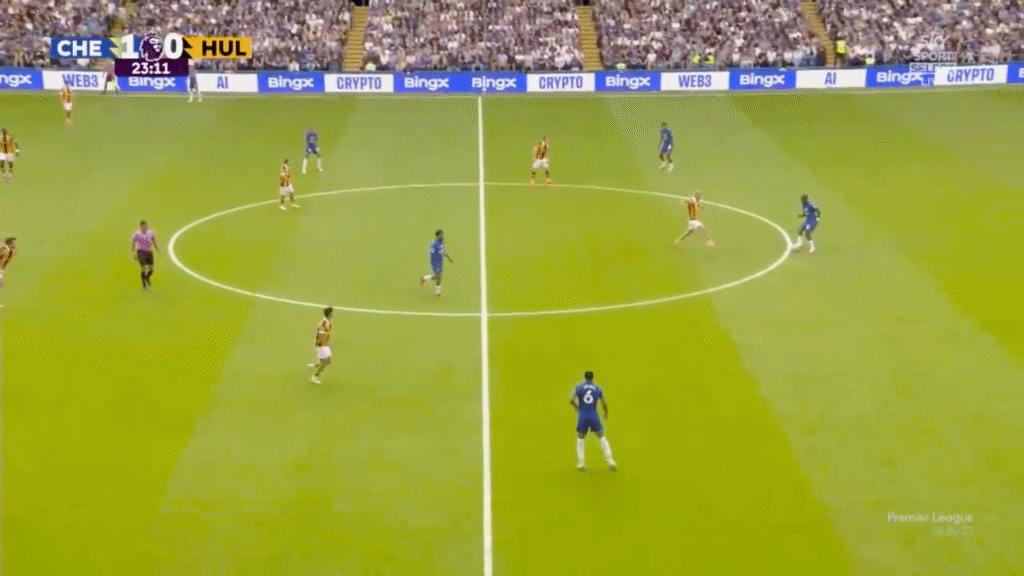
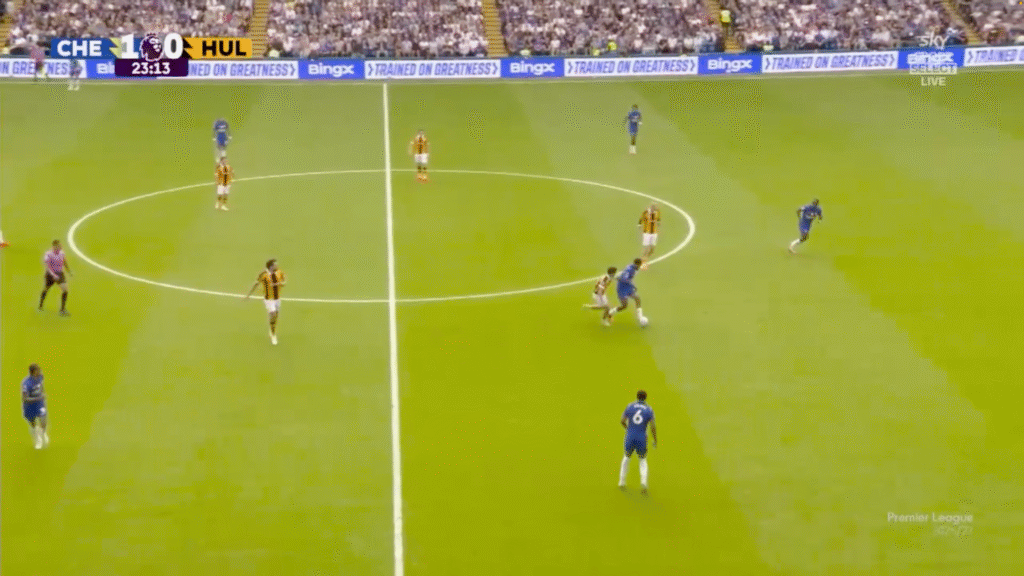
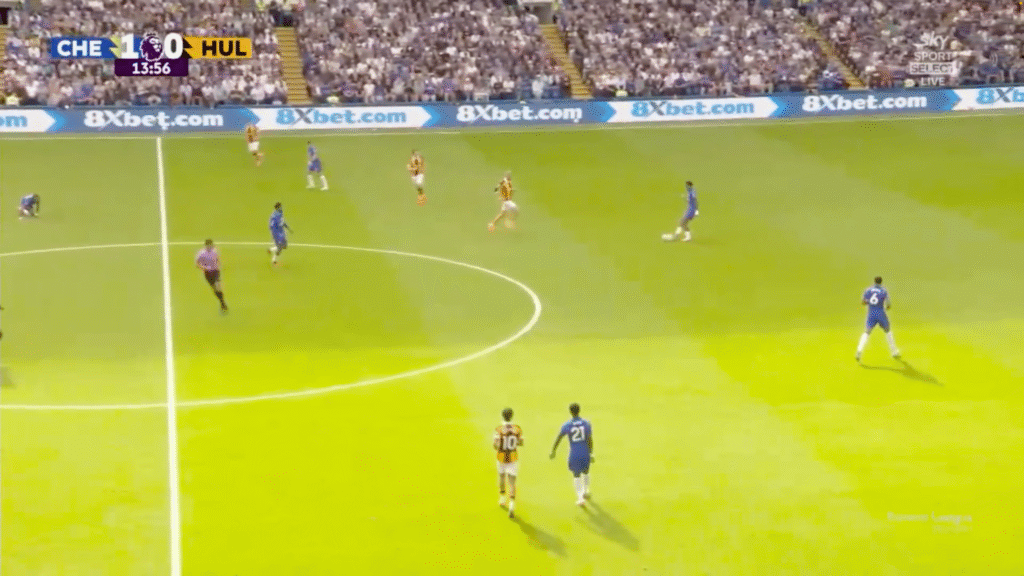
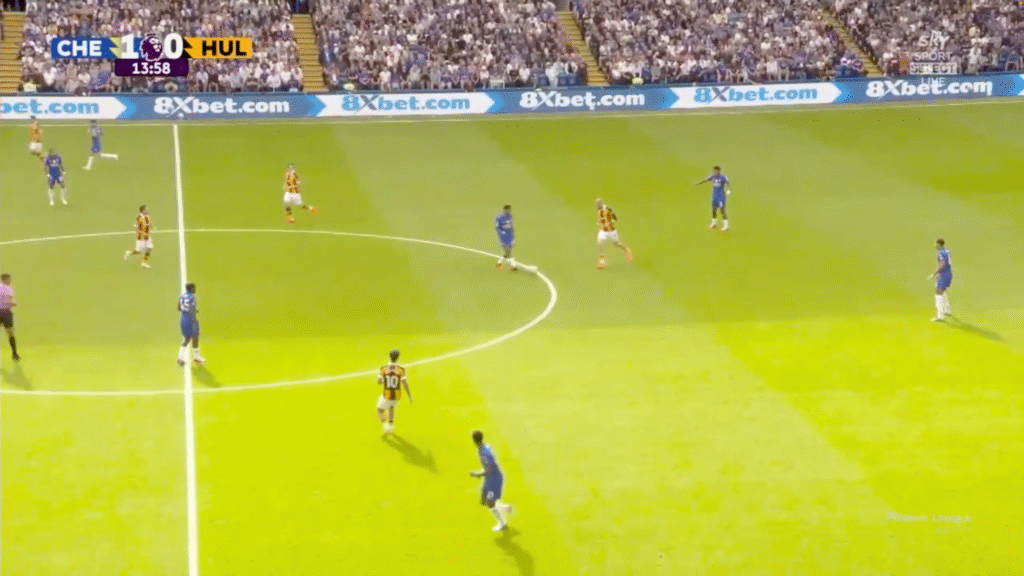
James will typically find himself in situations like those in the above pictures. He has an abundance of space around him, but is almost hard-wired to take touches towards whatever is in front of him as that is how he has always played at right back. His issues are eerily similar to those of Trent Alexander-Arnold when he has been sparingly used in midfield over the years.
Of course, there are the aforementioned pros to playing James in midfield, and in all fairness, he has been very serviceable there. But there are massive limitations for both him and Chelsea if he ends up making central midfield his long term home. It’s all well and good that he is capable of doing the most complex and impressive actions in midfield, but if he struggles to do the basics consistently, that will cause Chelsea problems more often than his best qualities will solve any.
Reece James as a right wing-back
Pros
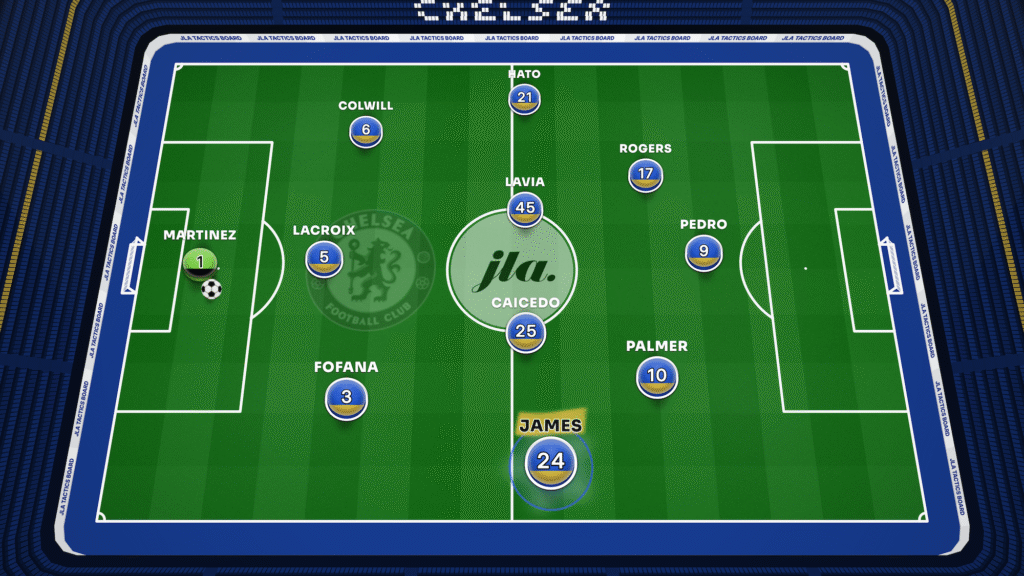
Xabi Alonso asks a lot of his wingbacks, and for Reece James, playing in that role would be very different from the typical right fullback role that he has all but mastered over the last few years. But regardless of those differences, it’s undeniable that playing there under Alonso would be the most natural for him in the entire system.
The angles that he had familiarised himself with throughout his youth and senior career would be the same from this position. And it may not seem like much of a pro, but at the highest level of football, being able to play with confidence is everything. Familiarity goes a long way to giving a player confidence, and I’d argue that as a result, James would be most confident at wingback.
An added benefit of fielding him there would be that he would likely get the absolute most of his crossing qualities. As I mentioned in the earlier, his crossing is likely his standout attribute and the more opportunities he is afforded to showcase it, the better. At wingback, with the nearly unlimited license to be involved in attacks under Alonso, he would most definitely be able to make the most of the attributes that make him one of the best players in the entire squad. In other words, playing at wingback would best platform James’ best qualities.
Cons
But as much as wingback platforms his best attributes, it arguably exposes some of the biggest concerns around him too. It has become something of a running narrative that Reece James is ‘made of paper’ and that is because over the last 3-4 years, he has had an awful injury record. In the seasons between 2021/22 and 2025/26, Reece James was sidelined with 18 separate injuries that spanned a total of 627 days (per Transfermarkt). This meant that he missed an absurd 128 games in that period – an average of 25.6 missed games per season.
The majority of these were hamstring injuries, and with the workloads given to fullbacks and wingbacks in the modern game, it is somewhat understandable. But Alonso, in particular, asks a lot of his wingbacks. In his Premier League games this season, first choice right wingback Pedro Neto has completed 60 sprints in 250 minutes (when lined up at right wingback). Which averages out at a massive 21.6 sprints per 90 minutes. Reece James by comparison has completed just 26 sprints in 292 minutes – playing all of his minutes in midfield. That gives him an average of 8.0 sprints per 90 minutes (per Fotmob).
And just before the international break, James picked up a thigh injury that forced him to miss the final 3-0 loss against Brentford as well as the international break with England. Those are 27 additional days that he has lost to injury even though he is being given a less intense workload.
But ironically, James still has the minerals to be a powerful runner. He currently has the highest top speed of all central midfielders in the Premier League this season at 34.1 km/h (per Fotmob). That would rank 7th amongst fullbacks and 15th amongst wingers. The issue is not with his top-end athleticism, but rather with how sustainable it is. And over the last few years it hasn’t been sustainable at all.
So, it may theoretically be most beneficial for Reece James to be Chelsea’s right wingback going forward, but practically, his body has shown little to no ability to meet the demands that would inevitably come with playing that role. This is an example of just how cruel sport can be. He possesses all the abilities that would make him elite in that position other than availability – and I’m sure he’s doing all he can to stay on the pitch.
Reece James as a right centre-back
Pros
This is maybe just a pipe dream, and is definitely the least likely to actually happen; but Reece James might make a decent right centre-back in Alonso’s 3-4-3 system. And really it boils down to the way that James has played in midfield.
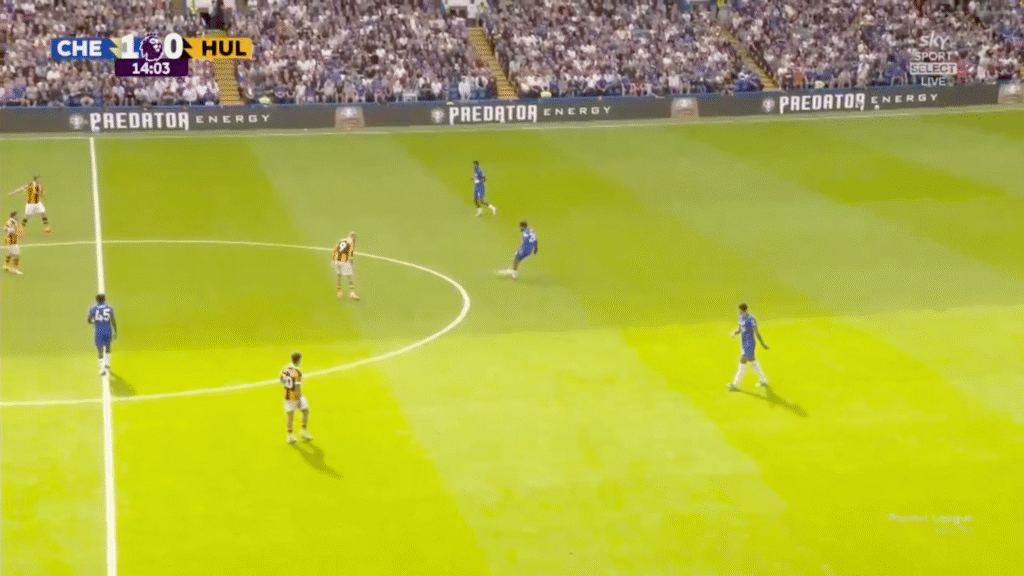
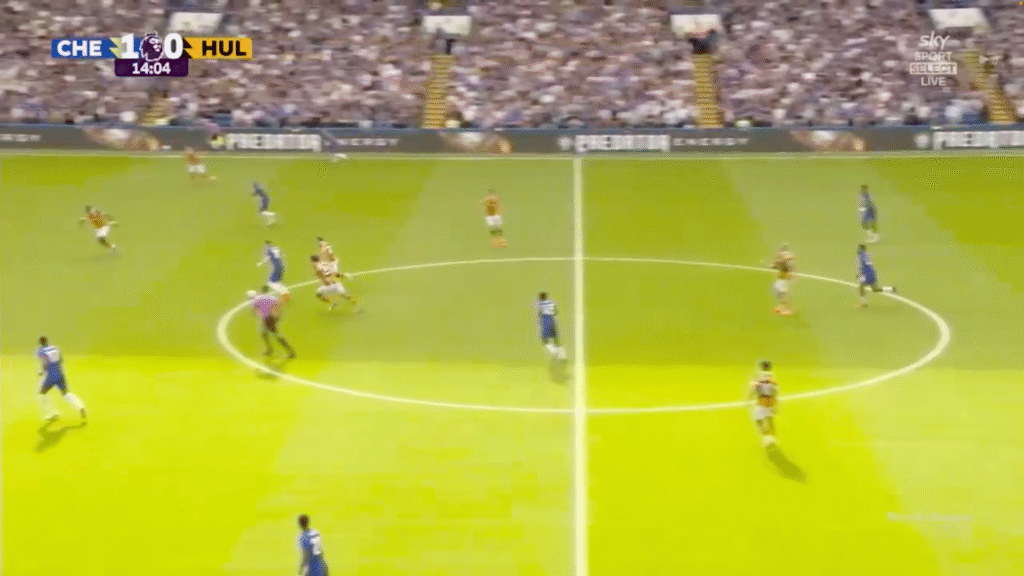
He will often find himself on the deepest line of Chelsea’s buildup (this is likely due to him being more comfortable with everything being in front of him) and from here he makes great use of his progressive passing. In the above diagram, James drops all the way out of the midfield to pick the ball up and then unleashes a hellish pass past 3 Hull City players to Cole Palmer – generating a great attacking transition for Chelsea. This is the kind of thing that were he to find a long term place in the backline, he would be able to do more regularly and with less compromise for Chelsea.
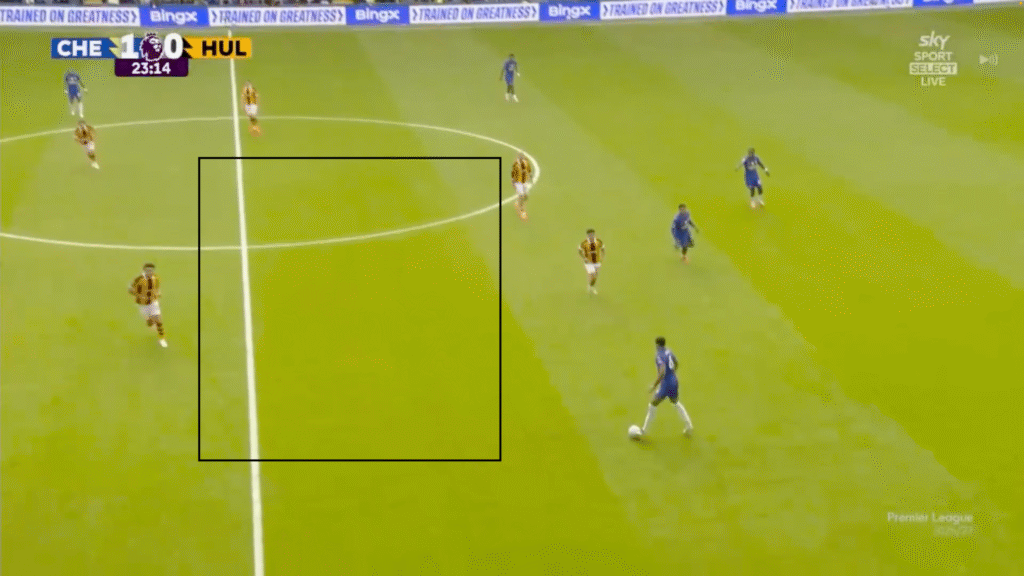
And I mention that compromise because dropping into these positions as a midfielder ,who only has one partner, will often leave massive gaps that limit Chelsea going forward, and hamstring them when trying to defend.
So moving him backwards could be good for Chelsea going forward, but it would also lighten some of his defensive load and maybe protect him physically in the long term. Already in midfield, James is given license to cruise (as seen by his sprinting metrics), and yet he still wound up injured. A move backwards to right centre-back would lessen the mileage he puts on his body, and give him a chance to stay fit enough to play.
Cons
But like I said, this is more of a fantasy than a real solution. James’ elite duel stats that I spotlighted earlier may paint a picture that leads one to believe that he could hold his own in the backline. However, there is a massive difference between duels in midfield and duels at centre-back. At 5’11, James isn’t exactly built like a centre-back. He does have great aerial duel stats, but in midfield 5’11 is relatively tall – at centre-back he would be undersized.
There isn’t much in his game that makes it clear that he would transition well to the defensive duties typical for centre-backs. He is more strategic and measured in his defensive work – unlike relentless runners like his teammate Moises Caicedo. Aggression is often important in defence, and that is even more true for a system like Alonso’s since there are massive spaces for the wide centre-backs to cover when the wingbacks get involved in attacks.
And following on from that systematic symptom of Alonso’s style of play, if the plan is to limit the number of intense actions James is involved in, there is an argument to be made that this is actually one of the worst positions for him to play. Pedro Neto or Malo Gusto’s marauding forward runs from wingback would leave an injury prone James with a defensive workload that he has never had to stomach in his career.
A move like this may help them be more potent going forward, but with Chelsea already one of the worst defensive teams in the Premier League (conceding 2.4 goals per game), the questions surrounding James’ ability to consistently defend in a brand new and uniquely challenging environment may be too much of a fantasy to be the solution to his awkward situation.
Closing Thoughts
It’s fair to say that James finds himself in an awkward position. His future in the team isn’t clear. There are pros and cons to him in all of the positions I have mentioned here and really that is a testament to his qualities and wide range of them too. But if Chelsea really want their captain to be an integral part of their future, they will have to iron out at least one set of those cons and find a way to mask them the best they can.
If I had to bet, I’d guess that James ends up in midfield for the foreseeable future. The quality of Pedro Neto at wingback to start this season along with the massive lack of depth that Chelsea currently have in midfield is likely going to keep James in midfield out of necessity.
I still find his limitations to be crippling at times, but it is definitely the least troublesome solution of the three. After all it is the best opportunity for him to get consistent playing time without putting an undue and unsustainable amount of pressure on his ailing body.
But his best position? I’d argue that it’s at right wingback. His injury issues cannot be ignored, but his natural feel for the position and the fact that it gets his best qualities on the best platform means that on the whole, it speaks to me most convincingly.
But as I mentioned at the very beginning, these solutions take into account the fact that Chelsea are likely desperate to have James in the team in some capacity. It isn’t clear, especially after seeing just how many problems that can cause, that acting on such desperation is actually what’s best for the team. There is definitely a world in which Chelsea under Alonso cannot figure out what to do with him in lieu of his limitations and the team works better with him on the sidelines.




Quarterbacks have the most impossible jobs in pro sports