
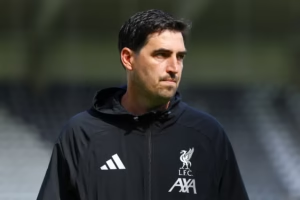

So, now that Liverpool have concluded their transfer business for the summer, we can finally come to a conclusion on whether Andoni Iraola’s first transfer window as Liverpool manager has been a success.
But first, we must outline what success would even be – otherwise you could argue on an endless set of criteria, and that would be pointless. In an attempt to be reasonable, a success for Iraola would be to address any glaring holes in the squad, as well as injecting some of his footballing DNA into it and weeding out those who don’t fit.
The reason for this set of criteria is just that logically speaking, the transfer window’s primary function for clubs is to improve their squads and prepare them for their games to come. And before a club is able to look towards how they can win more of those games, they must have a steady foundation from which they can build – that is why most teams fill glaring holes before they add star power. It’s much more important that a team ends a transfer window with a coherent squad than it is for them to have a shiny one, so that is why I’m more concerned with the glaring holes than I am with the shiny additions.
As for the introduction of Iraola DNA within the squad, one of the biggest challenges for a club that brings in a new manager is whether or not the manager can confidently implement their unique ideas with the squad that they are given. After all, it was those very ideas that led Liverpool to bring in Iraola in the first place – if they were not to give him a squad that could carry out his plans, they would have failed in their jobs before the new manager even has a chance to succeed in his. So, that is why the incomings and departures are also important here.
Now, it is very easy to look at squads after transfer windows and say, ‘wow, how did they not sign a “position X”?’ or ‘they should have signed “player Y”’. But it is important to remember that the window that just took place will not be the last one in the history of football, and that teams rarely ever address every single need or sign every top target in just one window – at least without being reckless. And if Liverpool’s summer window last year can tell you anything, it’s that even when you are reckless, and spend so much money (£446m) that you seem to have covered the majority of your wants and needs, you can still end up being totally wrong.
Did Liverpool fill the glaring holes?
The reason the first measure of a good window is whether glaring holes were filled is because without doing that, nothing else really matters. If there is something that has the potential to be a massive limiting factor over the course of the season, and you do nothing about it, it doesn’t matter how much talent you surround that hole with – the hole is going to be the thing that defines your season. And this summer the two glaring holes were the right-wing position, after losing Mohamed Salah, and the thin centre-back group that was neglected last season and further depleted this summer with the departure of Ibrahima Konate.
In hindsight, you could say that this time last year, Liverpool didn’t do a good enough job filling the hole left by Trent Alexander-Arnold, but that would be an instance of hindsight being 20/20. No one could have envisioned Conor Bradley tearing his ACL. And he was deemed by most to be good enough to fill that gap based on the body of work he had produced in Alexander-Arnold’s frequent absences in the two seasons before. £30m signing Jeremie Frimpong’s poor play and injury troubles were also unforeseen. I bring this example up because it shows how we may revisit a club’s transfer window and speak on it in a way that we didn’t at the time due mostly to the way new players perform. There was not ‘right-back problem’ for Liverpool on September 1st last year because that hole looked like it had been filled by Bradley and Frimpong. That is what I don’t want to do with the 2026 summer window, the holes I will address here will truly be glaring, and not holes that might develop because I think certain players may not perform under Iraola.
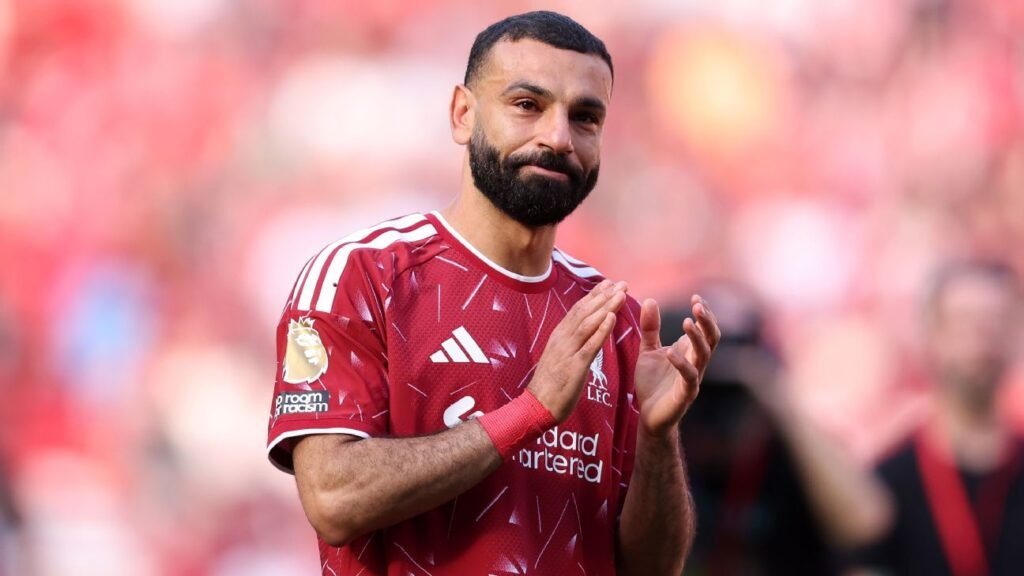
With that being said, Liverpool have done a terrible job in filling the most glaring hole they’ve likely ever had to fill. Mohamed Salah announced that he would be leaving the club on March 24th. That was 5 months ago. So, over the last 5 months, Liverpool have not only failed to adequately replace the Egyptian legend, they have failed to replace him in any real capacity. Of their two forward summer signings Victor Muñoz and Bradley Barcola, neither are naturally right wingers, with them both having spent the majority of their time on the left side. Given the fact that both rising star Rio Ngumoha and mainstay Cody Gakpo operate almost exclusively on that side too, there are many questions to be asked of what the recruitment team have been doing since March 24th.
Replacing Salah had to have been Liverpool’s number one priority once it was clear that he wasn’t going to be around for the new season. Failing to do so is maybe the biggest blunder of any club this window.
On a brighter note, however, Liverpool struggled with centre back depth immensely last season after they missed out on Marc Guehi on transfer deadline day last year, and paid for it over 9 painful months. The injury issues for then new signing Giovanni Leoni and veteran Joe Gomez left the Reds very short in central defence all season. This lead to Virgil Van Dijk, at 35 years old, playing every single minute of the Premier League season, something that he cannot be relied upon for as he nears football’s typical retirement ages.
Ibrahima Konate’s up and down form last season not only highlighted the need for improvement outside of Van Dijk, but also lead to the Frenchman being let go at the end of his contract in June – eventually following in Trent Alexander-Arnold’s footsteps and joining Real Madrid.
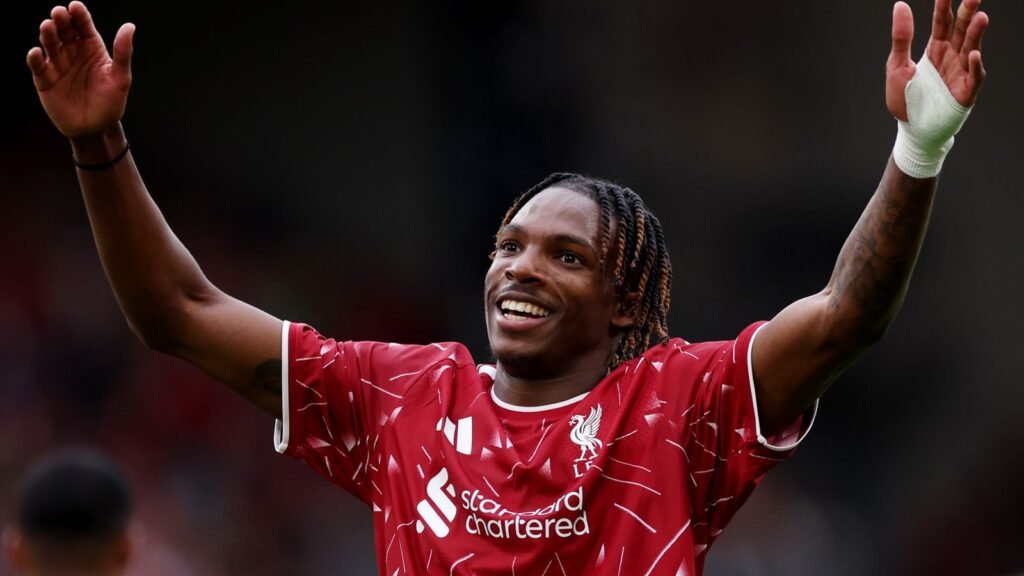
Bringing in Jeremy Jacquet for £60m may prove to be Liverpool’s best signing over the last three seasons, as the replacement Frenchman looks to be the real deal in the glimpses of him that we’ve seen to begin the season. In fact, to read just how important he could be to Liverpool over the coming years, click here to read my player spotlight. In addition to Jacquet, Liverpool surprised everyone and signed Ronald Araujo on a season-long loan from Barcelona – a loan that includes an option to purchase the Uruguay international for €55m at the end of the season. And the aforementioned Giovanni Leoni is set to return from his lengthy injury at some point in 2026.
This is what filling a glaring hole looks like. Liverpool have provided themselves a lot of cover for any injury concerns, poor form, or tactical changes by bringing in both established and potentially brilliant players in a position of need.
Whilst the work in the centre back area can be applauded, the fact that with 5 months to work on it, Liverpool did not sign a replacement for Mohamed Salah is just something that cannot be ignored. So, it would be amiss to say that on the criteria of filling glaring holes, Liverpool succeeded this summer.
Can this be Iraola’s team?
As I mentioned, the next objective for the club was to make the squad one that the new manager could really work with and mould into something that best demonstrates his footballing ideas. To judge how well the club did this, the best measure would be to look at his best performers from his previous club Bournemouth and whether Liverpool have players that can replicate the play that Iraola got out of them.
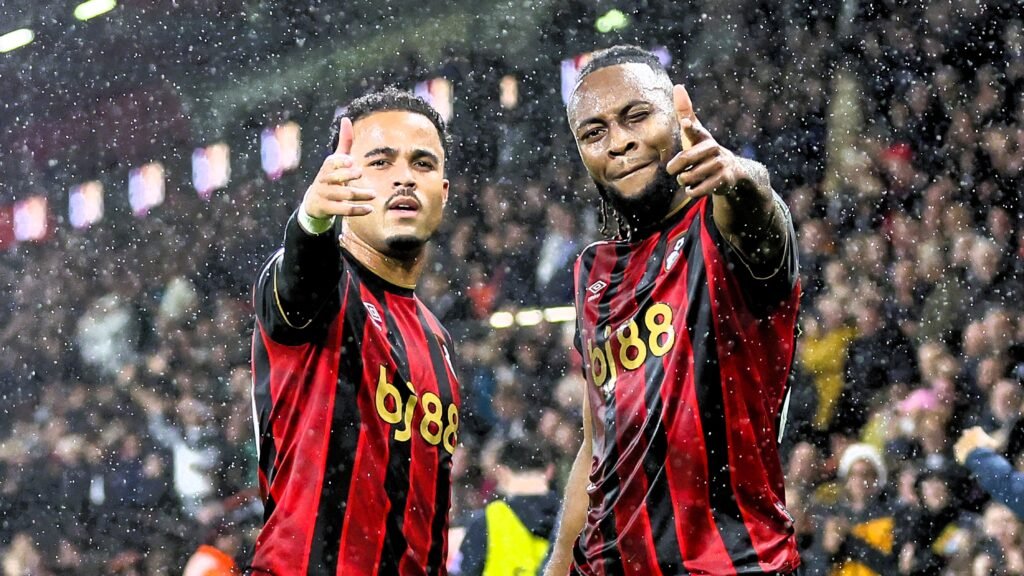
In his time at Bournemouth, Iraola’s teams were defined by their attacking play. The standout players in his time there were Antoine Semenyo, Justin Kluivert, Junior Kroupi, Dominic Solanke, and Rayan. The common theme with these players is that they are technically sound, quick, and direct forwards. Players capable of playing quickly in transition, but also possessing the quality to create goals in settled play too. At Liverpool, Iraola, will have this in abundance.
Both Alexander Isak and Hugo Ekitike are strikers that have shown their quality in such direct attacking teams at Newcastle and Frankfurt respectively. Rio Ngumoha is an X-factor that will tend well to Iraola’s fast pace, and obviously the £123m signing of Bradley Barcola is one that is tailor-made for the Spanish manager’s philosophy.
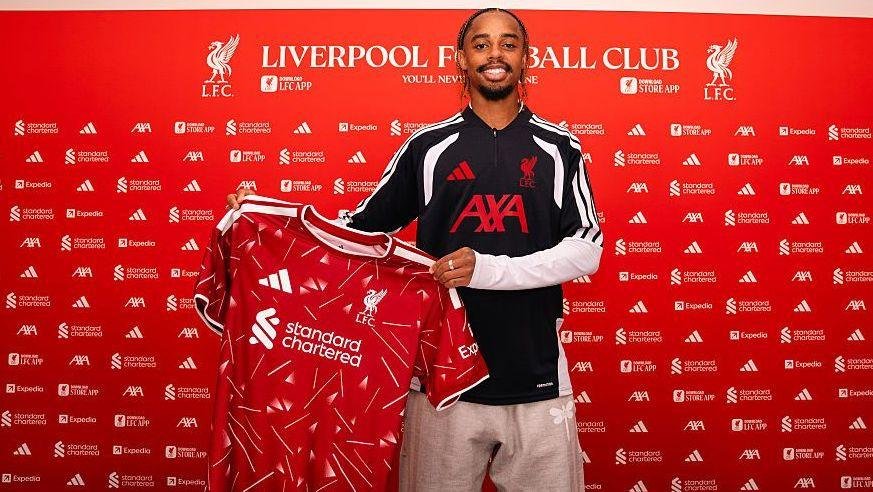
The former PSG winger has built his career on the back of his electric pace, ability to beat defenders, and his relentless work off the ball – all of which are key qualities that Iraola values in his forwards. The same pace and power can be found in £34m signing Victor Muñoz, and gives the sense that Iraola can definitely mould this forward line to his liking.
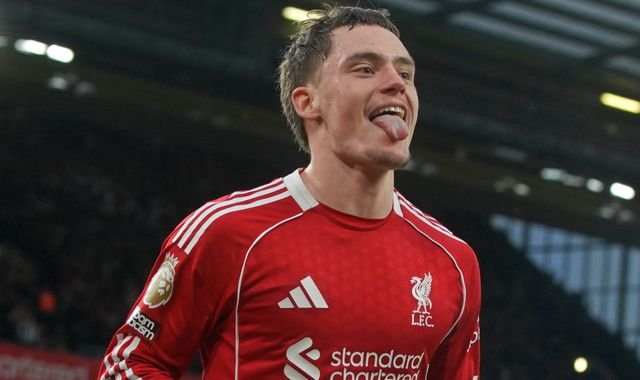
In addition to those players, Iraola will have Florian Wirtz at his disposal. The German international struggled in his first season at Anfield, registering just 7 goals and 10 assists in 49 games after being signed for a then club record £116m. Wirtz, however, is clearly a master technician who has shown glimpses of true brilliance, and under Iraola, he seems to have found a permanent role in the no.10 position after being deployed in many different positions under Arne Slot last year. Wirtz will undoubtably be the most talented attacking midfielder that Iraola has ever coached, and given that he got so much out of Justin Kluivert and Junior Kroupi in similar positions at Bournemouth, we can expect Wirtz to have a strong bounce back season.
As well as his potent forward line, Iraola’s Bournemouth side had dominant centre backs, and given the lack of that at Anfield last season, the Reds did a great job in not only filling that hole as I mentioned earlier, but filling it with profiles that Iraola values in his defenders. Both Jacquet and Araujo are aggressive, front-footed centre backs, and for Jacquet especially, can add value with the ball at their feet too. Again, I would implore you to read this piece on Jacquet for a deeper dive into just how well he fits this system.
With those being the most unique parts of Iraola’s teams, it’s safe to say that Liverpool did a good job in making the squad they take into the season, regardless of its flaws and Mo Salah sized hole, one that has some Iraola DNA in it.
As for the notable outgoings, these too did a good job of weeding out some players who likely wouldn’t have fit in to Iraola’s plans. Ibrahima Konate’s limitations on the ball and in transition mean that his departure is unlikely to be one that hurts. Curtis Jones’ lack of physicality in midfield is again a factor that may have led to him being a bit-part player this season. Losing him to Inter Milan for £30m hurts more because he was the only remaining Scouser in the squad more than it does for any on-field reason. Andrew Robertson and Mohamed Salah’s free transfers to Tottenham and Trabzonspor respectively will also be afterthoughts soon as their declining athleticism would have proved to be limiting factors for Iraola’s high octane style of play.
Conclusion
In conclusion, Liverpool’s summer transfer window could be viewed as a success to some. Bringing in the electricity of Barcola and Muñoz is applaudable, as they are the kinds of players that Iraola has had lots of success with in the past. The addition of Jeremy Jacquet looks like it may be one of the signings of the season and at just 21 years old, he could be a key player at Anfield for the next decade.
However, the last time Liverpool were competitive in the Premier League, Mohamed Salah produced the single greatest season from a forward in the competition’s history, scoring 29 goals and providing 18 assists – good for the most goal contributions in a single season. A season that also ended with the Reds hoisting the Premier League trophy for the 2nd time in 5 years. Salah had been the club’s best player from when he arrived in 2017 up until that historic 2025 season. Not replacing him with a player that could maybe eventually fill his shoes is one thing, not replacing him at all is truly unbelievable. One could argue that the club has a plan for how to deal with his absence that doesn’t require a like-for-like replacement, but given that three players (Rio Ngumoha, Cody Gakpo, and Victor Muñoz) have all spent time on the right wing after just 2 games, that argument looks fairly weak.
Not replacing Salah has the potential to define Liverpool’s season and if it was to, all of the other good work they have done this summer would feel pretty insignificant. And for that reason, it is difficult to call this transfer window a success, just one with the potential to be both a success or an abject failure; depending entirely on how big that blunder turns out to be. The window may have some bright spots, and it may have set their manager up to succeed, but it has the potential to be a dark cloud over the entire season – a dark cloud that is heavily concentrated out on Liverpool’s right wing.





Is Reece James being phased out of football?