


Is the best predictor of a great scorer not how good the player is at scoring the ball in a vacuum, but actually how good they are at giving themselves opportunities to score? I ask this question because I, for the life of me, have been trying to figure out why Alexander Isak, a truly elite finisher, has gone from scoring for fun at Newcastle, to being a near non-factor for Liverpool.

I think this is an inter-sport phenomenon so let’s use basketball for some illustration.
In basketball, players are often categorised by their playstyles. You have the facilitators like Steve Nash, Jason Kidd, and Chris Paul. You have the defensive specialists, like Tayshaun Prince, Ron Artest, and Rudy Gobert. You have the 3&D guys like Klay Thompson, Bruce Bowen, and Danny Green. You have the 3-point specialists like Kyle Korver, Kon Knueppel, and Ray Allen. And since I will come back to the 3-point specialist later, it is important to note that, for the most part, these players rely on their teammates to get them good 3-point opportunities as opposed to creating them on their own.
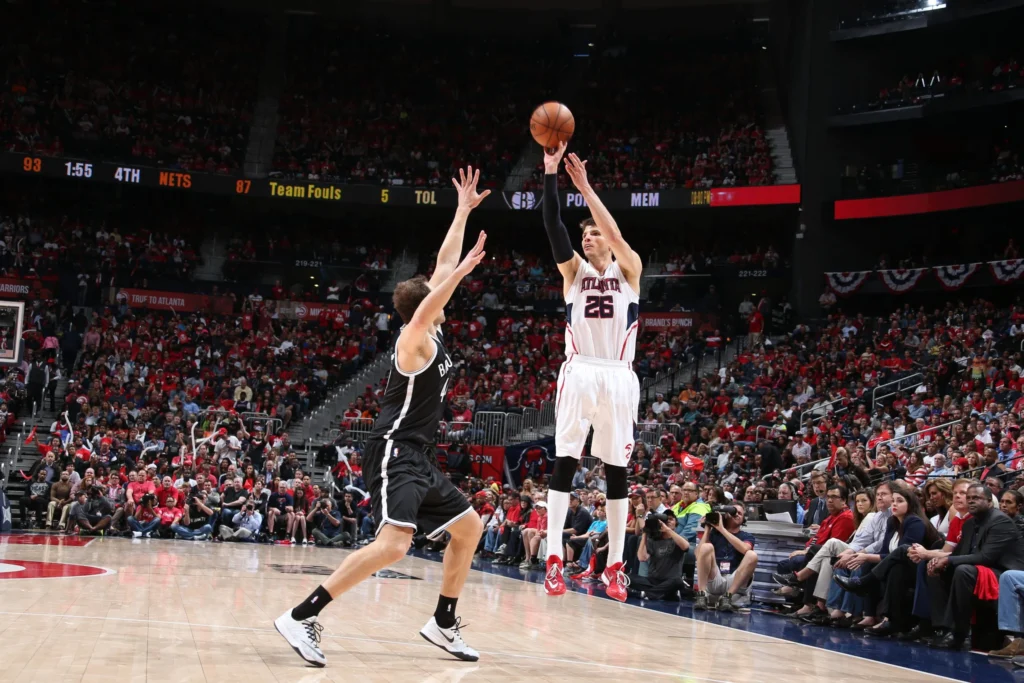
You could list these for days, but the most intriguing class of players is the volume shooter. Here is where you find players like Allen Iverson, James Harden, Tracy McGrady, Kevin Durant, Kobe Bryant, and even Michael Jordan. Now of course, shoehorning players into these classifications can only go so far as many players could be classed in many different categories. For example, Michael Jordan was one of the best defensive guards of all time and James Harden has led the league in assists in the past. However, for these players, their volume shooting was likely their most notable quality, and the one that etched their names in NBA history.
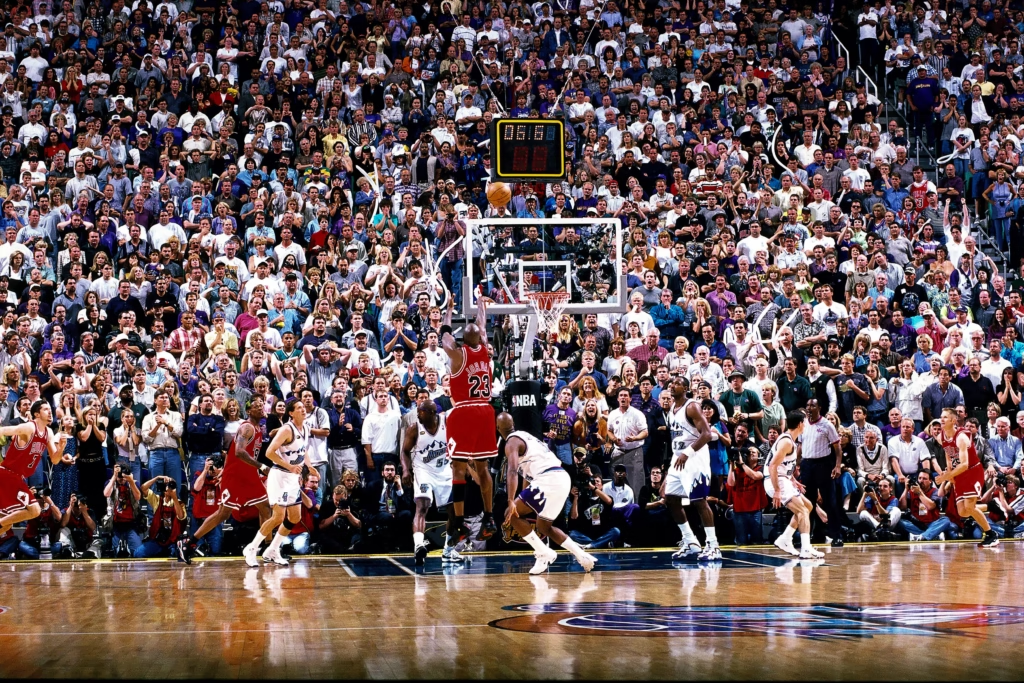
And for clarity, a volume shooter in this sense is just a player that shoots a high volume of shots. This can be any type of shot, so MJ shot a lot of midrange jumpers and layups, whereas Kevin Durant shoots a good amount of 3s to go along with his own midrange game. On the extremes of these different kinds of volume shooters would be Shaquille O’Neal, who almost exclusively shot layups and dunks, and Stephen Curry who has shot an absurd 9.4 3s per game thus far in his career.
The thing with being a volume shooter though is that one of the unwritten rules of making this class is that you must be able to ‘get your shot off’ in almost any situation. All of the players I have mentioned in this class so far have been players that can score on their own by getting to a spot and taking their shot. Curry can walk over half court and shoot a 3-pointer. Kobe could sliver past 4 defenders and take a fading midrange jumper. Harden can shake his defender out of his shoes before using his famous ‘euro step’ to get to his lefty layup. The point is, the volume shooter shoots a lot of shots, because they’re good at getting shots up by any means necessary.
Now just because the players I have mentioned so far have been all time great scorers and shot-makers, does not mean that if you are a volume shooter, you are great shot-maker. The key to being a volume shooter is that you get shots up, not that you make shots at a high rate. Some of the best examples of volume shooters that are not the greatest shot-makers (in a vacuum) would be Russell Westbrook, Jalen Green, and Jerry Stackhouse. These are players that shoot a lot of shots, thus score a lot of points, but do so whilst simultaneously missing a lot of shots.
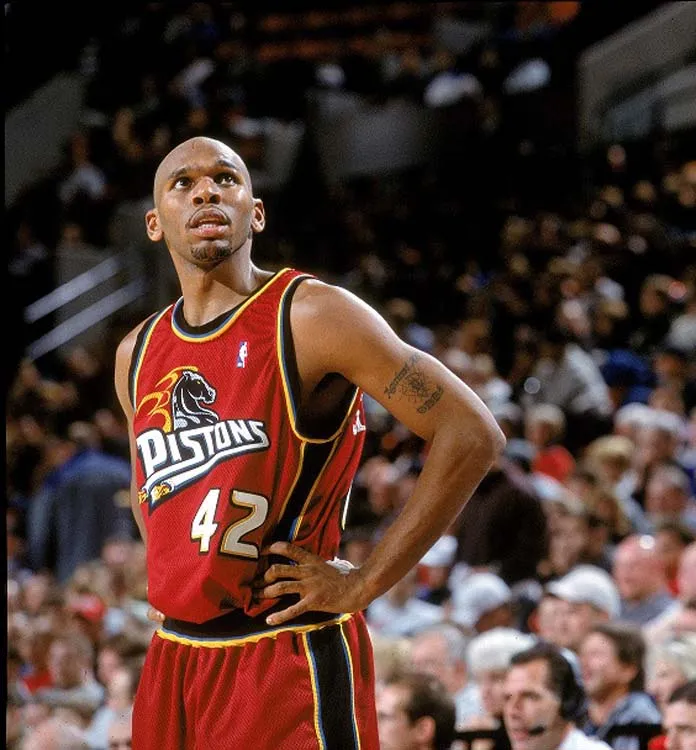
Jerry Stackhouse famously averaged an insane 29.8 points per game in 2000-01 but he only shot a measly 40.2% from the field, and simply supplemented that poor efficiency by shooting a whopping 24.1 shots per game. In that season, the league average field goal percentage was 44.3%. So, Stackhouse may have had the second highest scoring average that season, but he also took the second most shots, and ranked 93rd out of 101 qualified shooters for field goal percentage.
But for all the flaws of the volume shooter, in terms of efficiency, there is an art to being able to ‘get your shot off’. Being able to take as many shots as volume shooters do is a skill that shouldn’t be overlooked. Yes, in some cases, like Stackhouse’s, these players may miss a lot of shots. But on the whole, the fact that they were able to consistently get that number of shots off is applaudable. You can be the greatest shooter ever, but if you rely solely on your teammates to get you good looks, like some of the 3-point specialists do, then all of that talent is just sitting there wasting away as someone else takes all the shots.
It may be tempting to say something like, ‘why didn’t Kyle Korver shoot more if he was such a good shooter?’. But the fact is that Korver did as much as he could with the skills that he had. He simply wasn’t the kind of player that could take someone off the dribble to create space for his pure 3-point stroke. And whilst James Harden is not as good of a 3-point shooter in a vacuum, he has scored the second most 3s in NBA history (3,390) and Korver is in 8th (2,450). And that’s because in spite of the fact that Korver was a 42.9% 3-point shooter for his career and Harden sits at 36.4%, the former only shot 5,713 total 3s while Harden has taken 9,323.
In fact, of those in the top-10 for 3-pointers made in NBA history, you could argue that there are only four 3-point specialists (Allen [3], Thompson [4], Miller [7], and Korver [8]), with the rest of the list being made up of volume shooters (Curry [1], Harden [2], Lillard [4], LeBron [5], P. George [9], and Durant [10]).
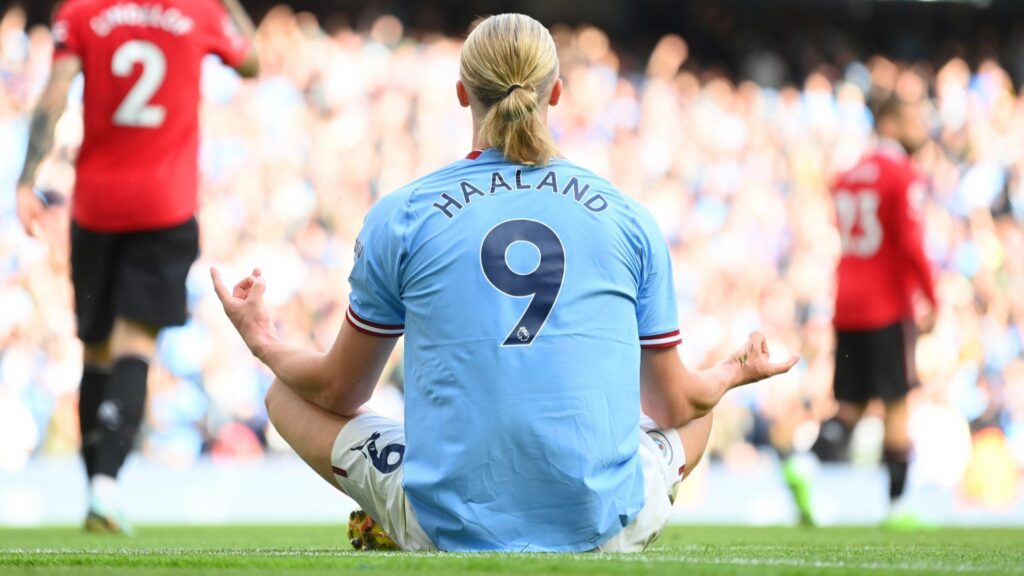
Okay so let’s look at how this translates to football as I attempt to diagnose Alexander Isak’s struggles. In the Premier League this season, the leader in goals and shots is Erling Haaland. He has taken 126 shots, 36 more than second place Matheus Cunha (90). But as we move down the list we see more figures that fall in line with the ideas that the volume shooters in the NBA highlight.
Morgan Gibbs-White is a great Premier League footballer, who has an abundance of qualities. And while he is a good finisher, it isn’t the first thing that would come to mind when you list off the things that he’s good at. Viktor Gyokeres however, is the kind of player that you would think of if you wanted to name the best finishers in the league. This season, Gibbs-White has scored the 4th most goals (14) in the Premier League, and Gyokeres has also scored 14. The difference between the two is that Gibbs-White has taken the 7th most shots this season (80), whereas Gyokeres is sitting in 32nd (54). Now part of this is likely because of the surrounding skills that these players possess. Gibbs-White is the type of player that can create a shot for himself with link-up play and dribbling. So he, in theory, has more paths to ‘getting shots off’ than Gyokeres, who is limited in some areas and relies on his teammates to put him in good positions to ‘get shots off’. So, if we think back to basketball, Gibbs-White is the volume shooter, and Gyokeres is a 3-point specialist. If push came to shove, and all you needed was a shot taken, you might have a better chance with Gibbs-White than you do with Gyokeres, even if our intuition may say otherwise since one is a midfielder and the other is a striker.
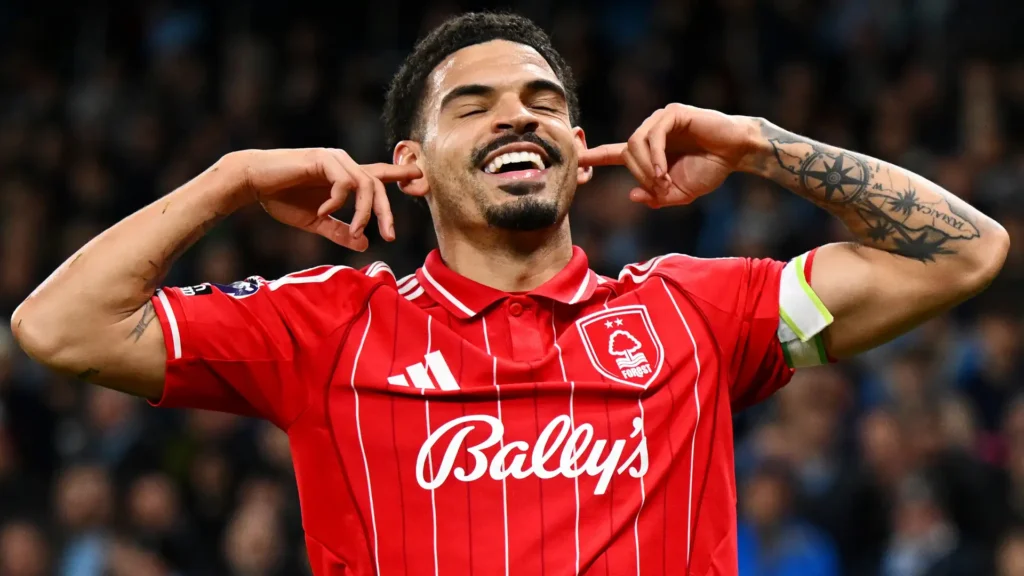
Alexander Isak, in my opinion, has fallen into the Gyokeres-esque, 3-point specialist mold this season. He has, on many occasions, had less than 10 touches in his appearances and averaged 23.05 touches per 90 minutes. For context, Gibbs-White averaged 47.16 on the season. This means that Gibbs-White simply has more opportunities to score (if he so chooses) than Isak does. Just like James Harden (a volume shooter) has more opportunites to score than Kon Knueppel (a 3-point specialist) does, because one had the ball far more than the other, Gibbs-White is just better placed to ‘get his shot off’ than Isak is.
Last season, when Isak scored 23 Premier League goals, he placed 7th in total shots taken with 99. And as a testament to his ‘specialist’ finishing nature, he even scored more goals per shot than Erling Haaland did last season with the Norwegian scoring 22 on 109 shots. And for those who love the sabermetrics, Isak outperformed his xG by 2.58 [23 – 20.42] whilst Haaland underperformed his by 0.01 [22 – 22.01]. So for Isak, if he ‘gets those shots off’, he scores a tremendous amount of goals.
And as I said earlier, there is an art to getting your shot off. There is value in simply being able to take shots, even if you’re missing them. Erling Haaland taking 36 more shots than any other player in the Premier League this season is a testament to his ability to ‘get his shot off’. The fact that he also scores the most goals just makes him the Michael Jordan kind of volume shooter, and not the Jerry Stackhouse type. That type may be reserved for Matheus Cunha’s 10 goals on 90 shots or Cody Gakpo’s 7 goals on 85 shots.
So, maybe when we’re trying to discern who the next great goalscorers or scoring leaders are going to be, we may want to ask, ‘who is going to ‘get their shot off’ the most?’ as opposed to, ‘who is the best at shooting?’. And if Alexander Isak is at training practicing his finishing wondering why he isn’t scoring in games, he might just want to practice ‘getting his shot off’ as opposed to the shot itself. Because he has shown that when he does actually pull that trigger, very good things happen.
Featured image – liverpool.com





Is Reece James being phased out of football?