


Well, this is very awkward.
I predict a 3-1 win for Liverpool and a return to the kind of form we thought we’d see from them at the beginning of the season (let’s hope that isn’t just wishful thinking).
Rilewa Razzaq (Oct 18th 2025)
So much for my 3-1 prediction then. Manchester United were the ones who walked out of Anfield on Sunday evening with 3 points after their 2-1 victory over their bitter rivals.
And at face value, my prediction seems totally off-piste as the scoreline would indicate that as well as losing, Liverpool did not return to the kind of form we’d expect from them at all. After all, many saw this as a slam dunk for Liverpool due to their almost inevitable success against United in recent times.
However, I would argue that although this loss is the headline and biggest talking point, the performance from the hosts was actually one of their best all season. There were aspects of the performance that were drastically better than their previous outings, and there were real, tangible improvements from the loss against Chelsea in their last Premier League outing (if you’d like to contrast some of the things I found most troubling in that match with the things I discuss here then check out the two podcast episodes that do deeper dives into both games and those improvements here).
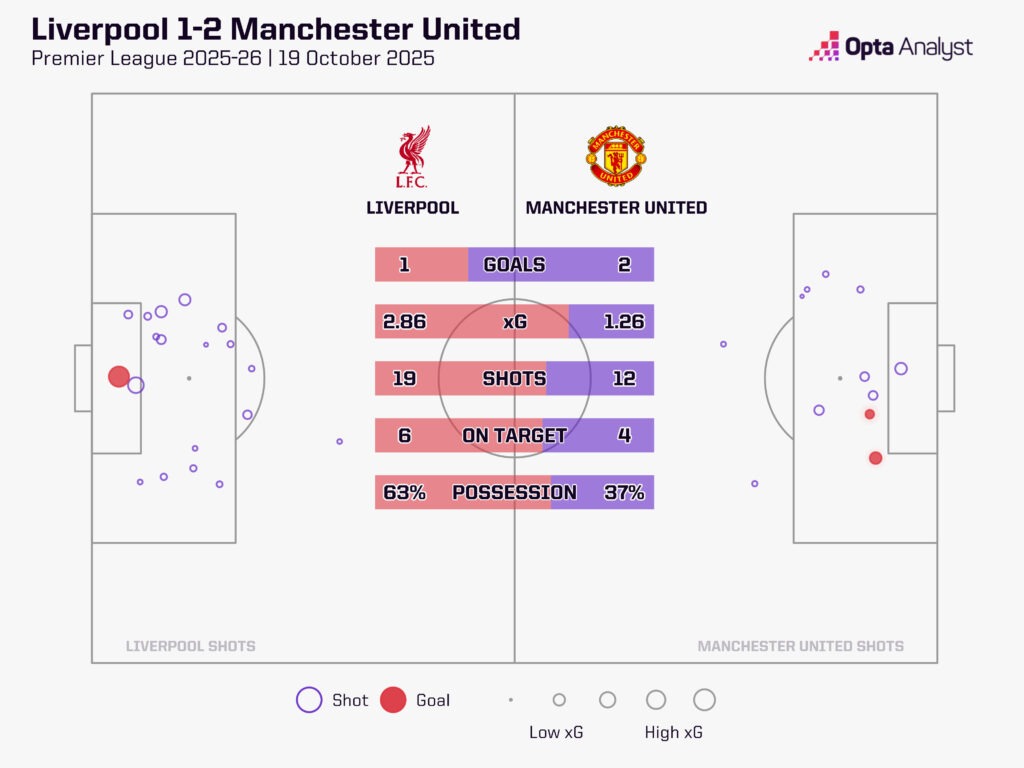
But let’s start with a brief overview of what actually happened in the game. The broad stats paint a picture that says that Liverpool had control of the game and created more than enough chances to win the game. But they were wasteful with those chances as they greatly underperformed when looking at their expected goals. And on the other side, United were very clinical as they outperformed their expected goals considerably.
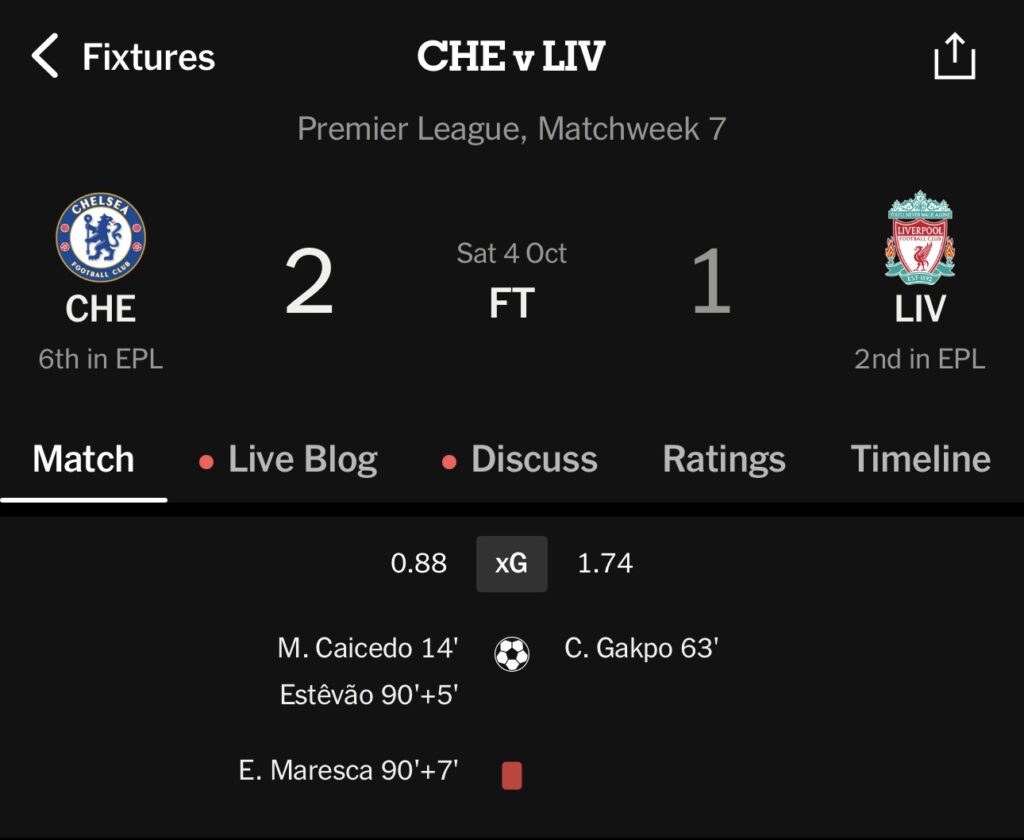
That picture does a very good job of illustrating what happened in the game as that is exactly how things went down – Liverpool will rue those missed chances, and United will be over the moon with the way they took theirs. But as I spoke of in that podcast episode on the Liverpool – Chelsea game, the broad stats cannot always be relied upon to draw accurate pictures. In that game, the stats would have you believe that Liverpool were unlucky to lose when in actuality, Chelsea deserved the 3 points.
Therefore, it’s good practice to look at the underlying themes as they will greatly increase the quality of the initial picture that the broad stats gave us.
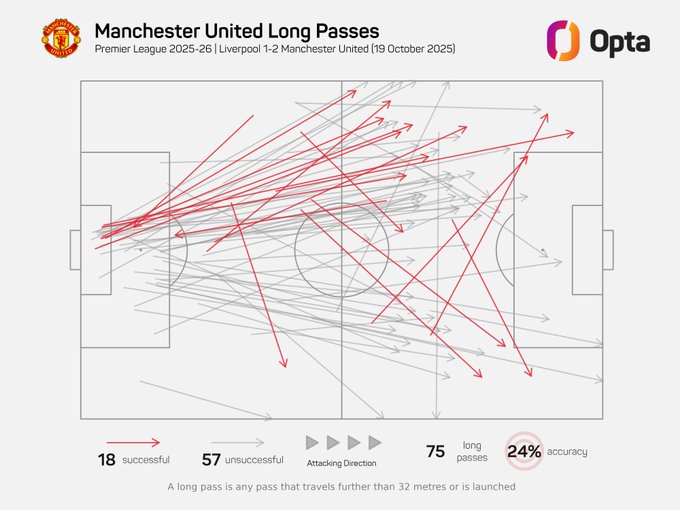
Manchester United clearly had a plan – let’s not bother trying to play through them, let’s just play straight over them? A whopping 25.5% of their passes were long passes (the highest percentage of long passes by any team to visit Anfield in 2025). And many of their long balls were not designed to be completed – the plan was to allow Liverpool to deal with the initial ball and then capitalise on the second ball. That can be seen in the graphic above that shows the accuracy of these long balls to be a measly 24%.
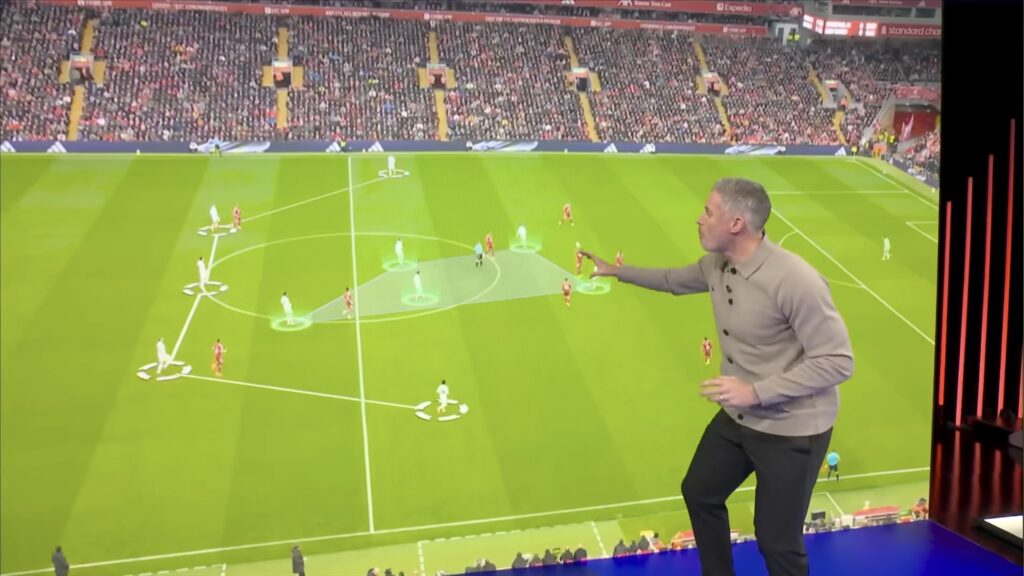
And as Jamie Carragher expertly made clear on Sky Sports, the Man Utd midfielders and forwards drastically adjusted their positions to be better positioned to win those second balls. By being much narrower and closer to the site of the initial ball, they were better placed to win the second.
This is how Utd were able to score after 62 seconds. The winning of consecutive second balls and forcing Virgil Van Dijk to step out to deal with the initial balls, allowed Bryan Mbeumo to sneak into that vacated space and open the scoring.
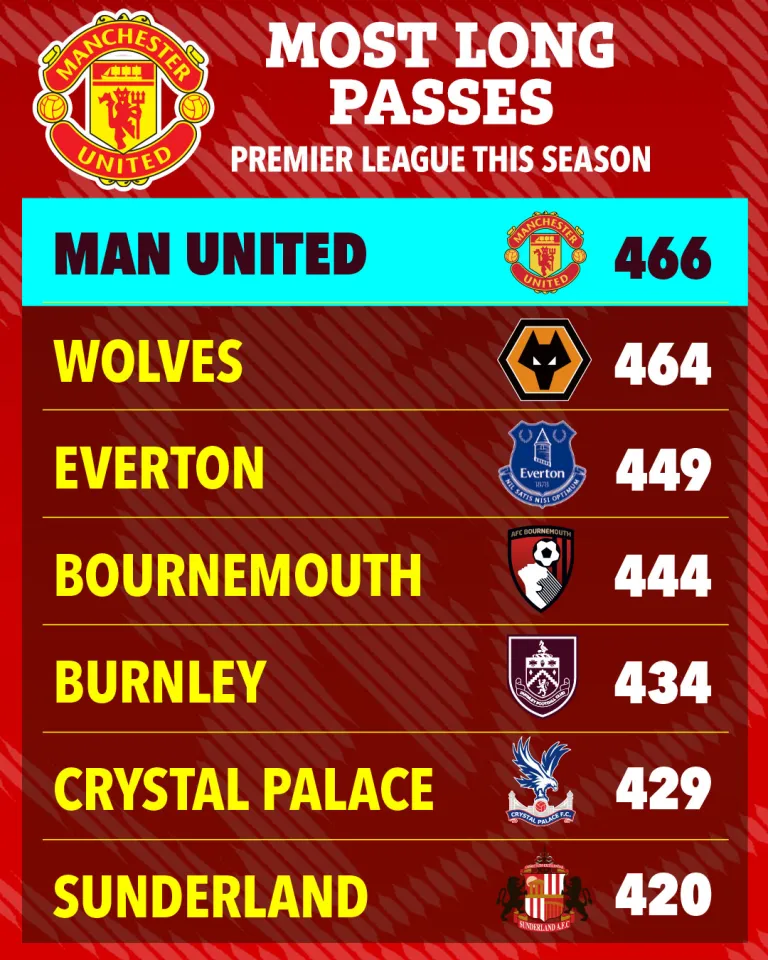
And while playing long is part of how Man Utd play, as they lead the league in long balls played (466), they clearly bought into that even more on Sunday. As you can see below, the Man Utd goalkeeper Senne Lammens played 44 passes in their 2-0 win over Sunderland before the international break. Against Liverpool, that number was 46 – no real difference. What was intriguing was the number of short passes he played. Against Sunderland, 7 of his 44 passes (16%) were short, against Liverpool there was just 1 (2%). So Amorim clearly abandoned the idea of playing out from the back this weekend and it paid off.
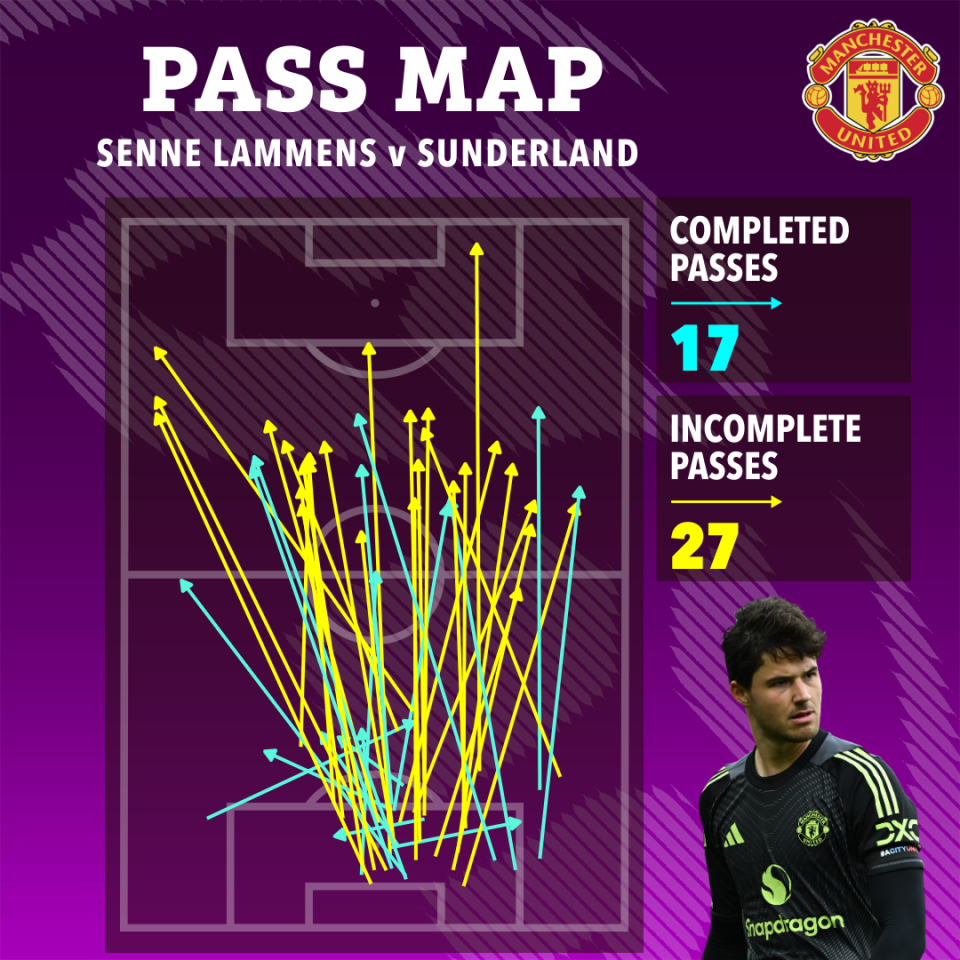
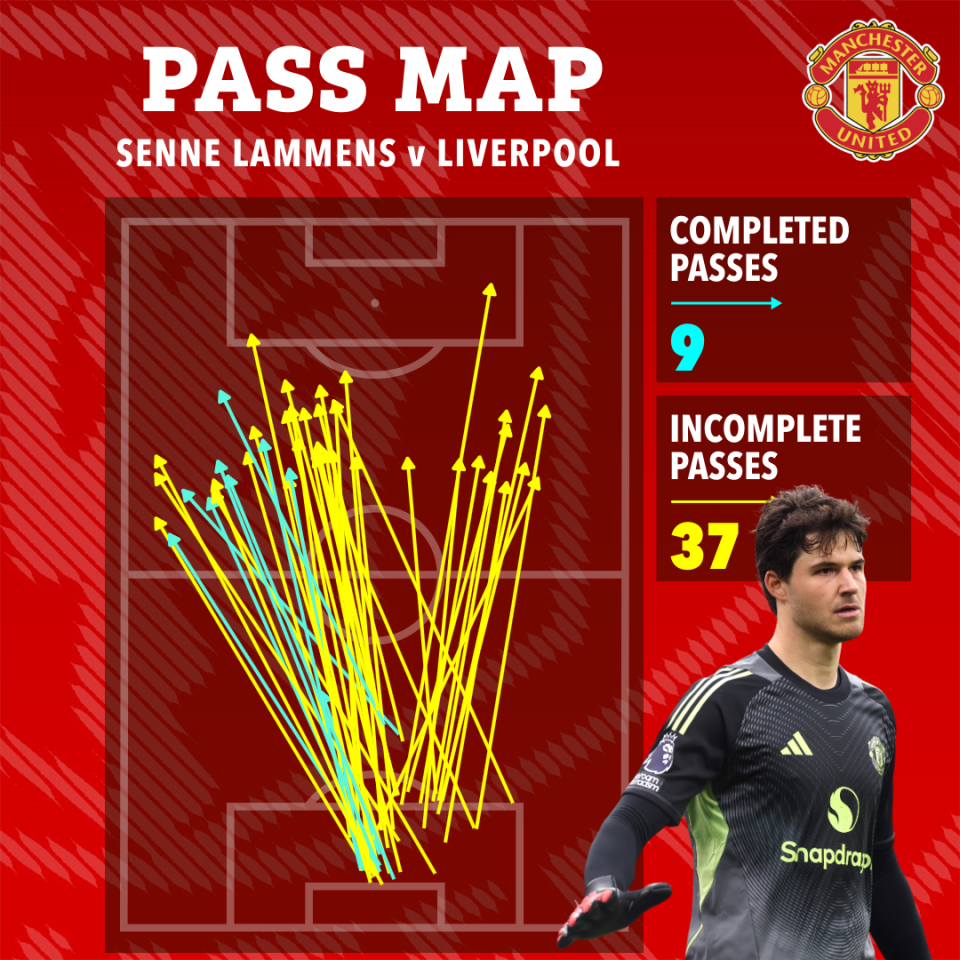
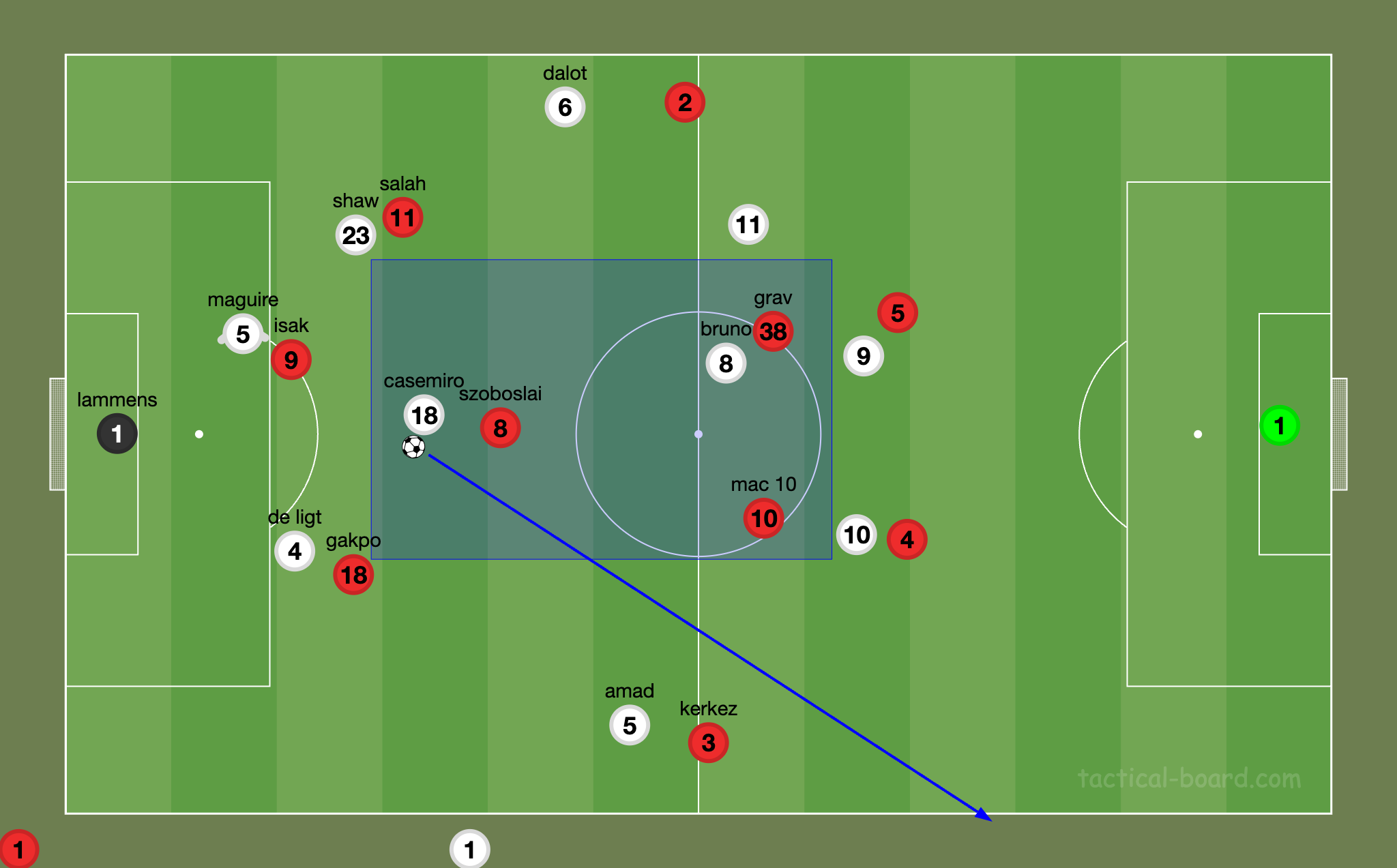
That one time that Lammens initiated play out from the back, Casemiro was forced to play the ball straight out for a throw-in as he had no passing options. That has been a theme for Amorim’s Utd over the last year as there seems to be a clear disconnect between each unit of his team which means that consistent play out from the back is almost impossible. That inability to consistently control possession in games almost single-handedly explains why Man Utd seem to struggle in games where they are supposed to be the superior, ball-dominant side, with their disappointing 1-1 draw to Fulham being the best example.
So, while Utd walked out as victors, there may be some concern about how they can replicate that kind of play in their future fixtures. They host Brighton this upcoming weekend and although they may be the bigger club on paper, it will be interesting to see whether they take the game to Brighton and try to control the game, considering the Seagulls like to dominate possession themselves. That tendency to dominate possession from Brighton could end up meaning that Amorim is able to deploy similar tactics to those that took the 3 points at Anfield.
As for Liverpool, the rhetoric surrounding the loss was overwhelmingly negative. A fourth straight loss and a first loss at home to Utd in the Premier League since 2016. However, the performance showed that Arne Slot made some key changes to the way the team played that bode well for the remainder of the season.
Firstly, the pressing structure against Chelsea was clearly ineffective and as a result, Marc Cucurella enjoyed one of his best games of the season.
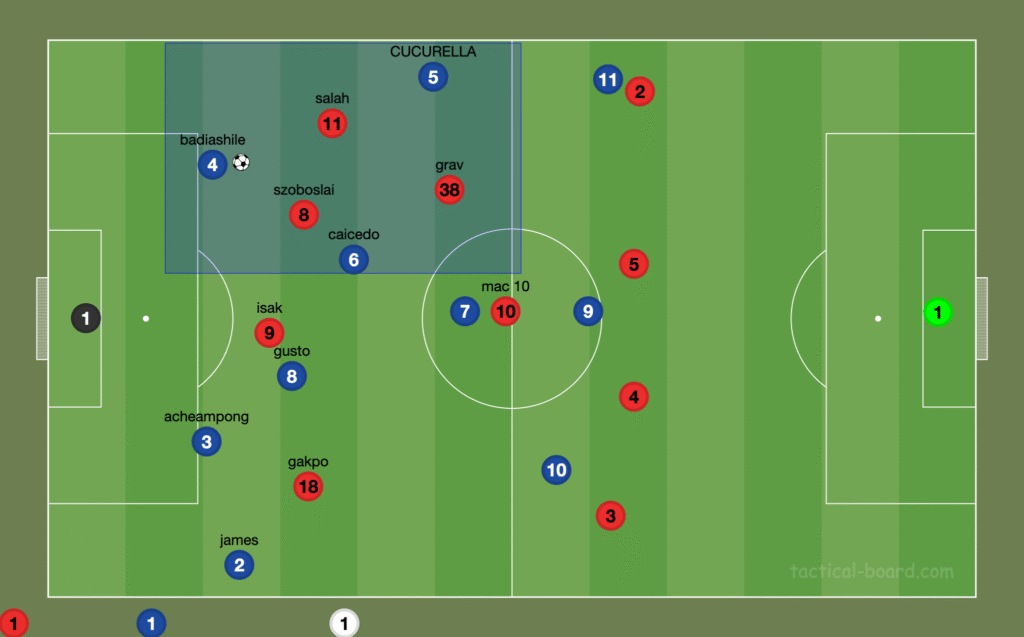
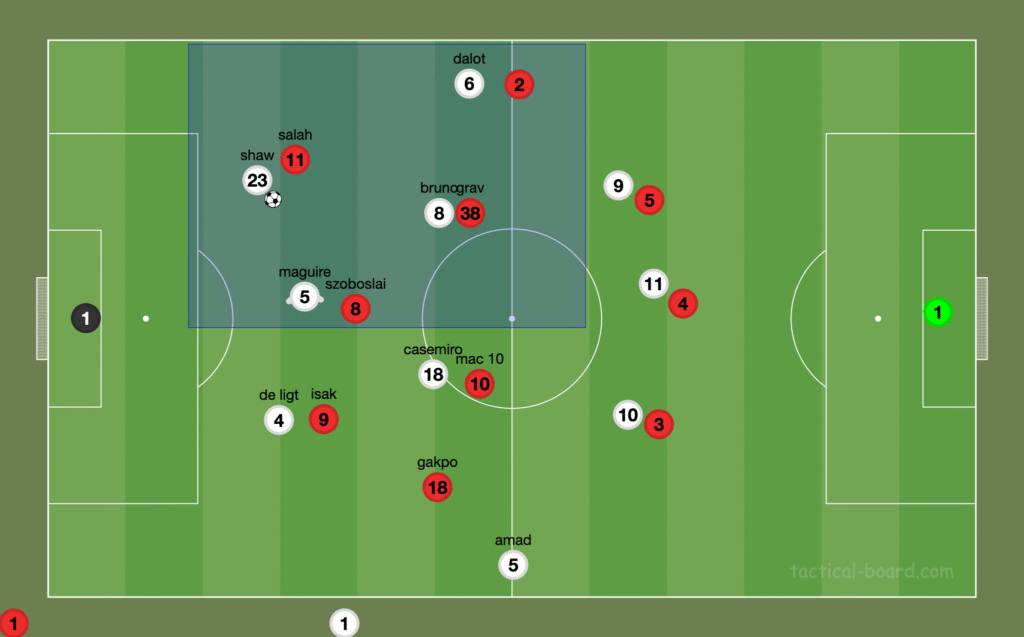
In that game Liverpool pressed zonally which allowed the Chelsea left-back to find pockets of space in behind Mo Salah, who was reluctant to offer much defensive support for Conor Bradley. Against Utd, Liverpool seemed to abandon the zonal pressing and opted for a man-to-man press. This saw Salah almost exclusively tasked with pressing Luke Shaw, who as a part of a back three, was not able to exploit Salah’s low defensive motor. In this regard, Manchester United’s formation and strategy actually hid one of Liverpool’s biggest weaknesses.
Amongst many others, that was the biggest defensive takeaway I had from the game and if Liverpool plan to play Salah a lot this season, they will do well to consistently hide his defensive deficiencies.
As for the biggest attacking takeaway, Milos Kerkez enjoyed much more freedom against Utd than he has in any other game this season. As I said in my article about why Liverpool’s signings seemed to be struggling so much, Kerkez’ role at Liverpool has, thus far, been very different to his role at Bournemouth. At Bournemouth, he had free license to galavant up the left-wing and cause havoc with runs and deliveries into the box. Against Utd, he finally had that license.
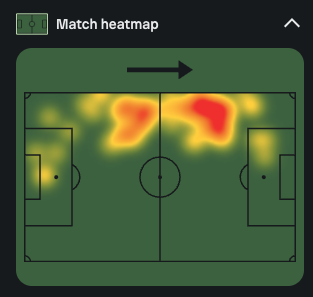
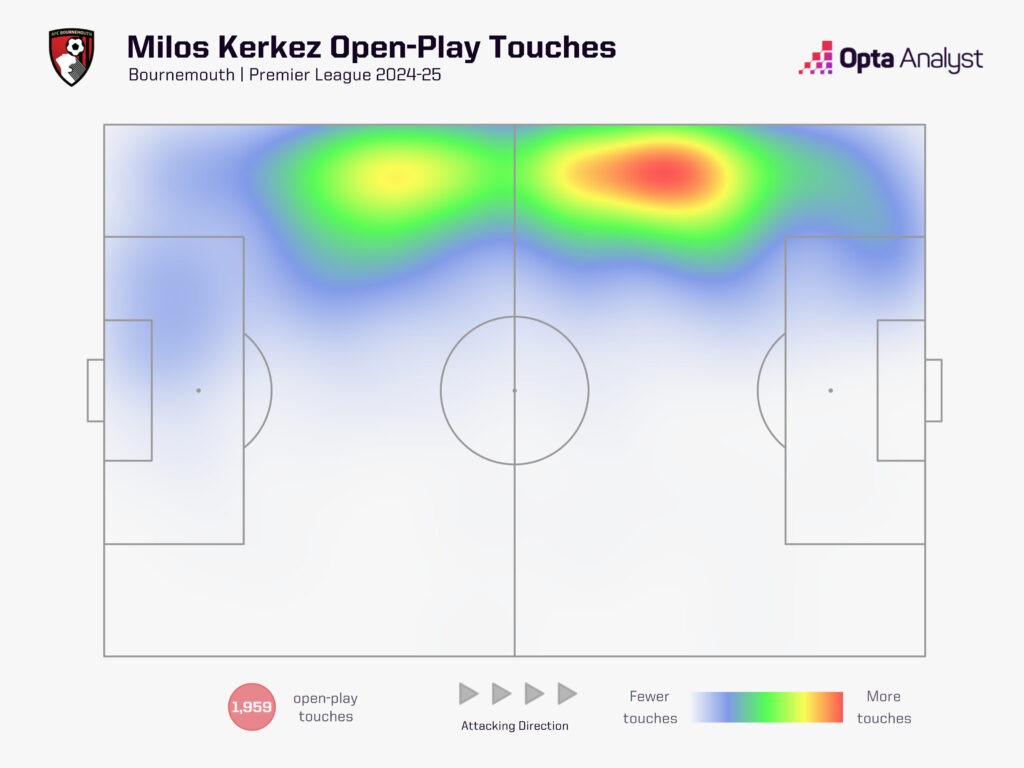
On the left is Kerkez’ heat map against Utd, and on the right is his heat map from his PFA Team of the Year-calibre season last year. They are very similar, and it explains why he played far better in this match than any other this year. If not for a poor shot past the near post from Salah in the 69th minute after Kerkez drove forward and crossed the ball to the back post, then he would have registered his first assist for the club. If Liverpool can build on that and continue to allow him to get forward and affect games offensively in that manner, then they will undoubtably get a lot more out of him.
Ultimately, as much as it came at the cost of my hopeful prediction, Man United did as much as they needed to do to win the game. While they may, in my opinion, have less to take from the game in terms of next steps and building blocks, they were able to take the three points. And at the very end of the day, in football, that’s all that really matters.




Are Liverpool trying to be like the Dodgers?