


When you think of who the point guard is for any given team, you might look for the smallest player, maybe the player who dribbles the ball up the court, or even the team leader in assists. And while all of these clues might help you find a team’s point guard, they aren’t foolproof and in some cases a team doesn’t even play with a true ‘point guard’ anymore.
I was at work earlier this week and a colleague and I were talking about the upcoming NBA season and eventually we got onto the topic of my favourite team, the Cleveland Cavaliers. I argued that we have a great chance at winning the title this year as we have a great roster which includes ‘a top-5 point guard in the league’ in Darius Garland. And my colleague took issue with that assertion as to him, Garland is far from a top-5 point guard. He went on to list the players ahead of him in that position: Steph Curry, Jalen Brunson, Tyrese Haliburton, Shai Gilgeous-Alexander, and Kyrie Irving. These 5 names were the first that came to his mind and immediately I recoiled at the idea that Brunson, SGA, and Kyrie were better point guards than Garland. Very quickly I realised that we had very different ideas of what a ‘point guard’ is and their job for a team.
I argued that those 3, (SGA, Brunson, and Irving) are not really point guards. They may be listed on sites like basketballreference.com as point guards and have the ball in their hands the most on their respective teams but that doesn’t necessarily make them point guards. As I said before, the usual clues as to who a team’s point guard is are not as telling as they maybe once were.
In 1990 you could turn on a Utah Jazz game and clearly see that John Stockton was the point guard. The way he surveyed the floor, made sure plays were run correctly, and acted as the on-court coach made his status as one of the best point guards to play the game undeniable. When Stockton played, everything went through him, but not only for him to be able to score himself but also so he could control what was going on. When I think of what a point guard is, I think of a player like John Stockton. One that is concerned with executing the game plan above all else. A player that intentionally makes his teammates better due to their understanding of the nuances of the game.
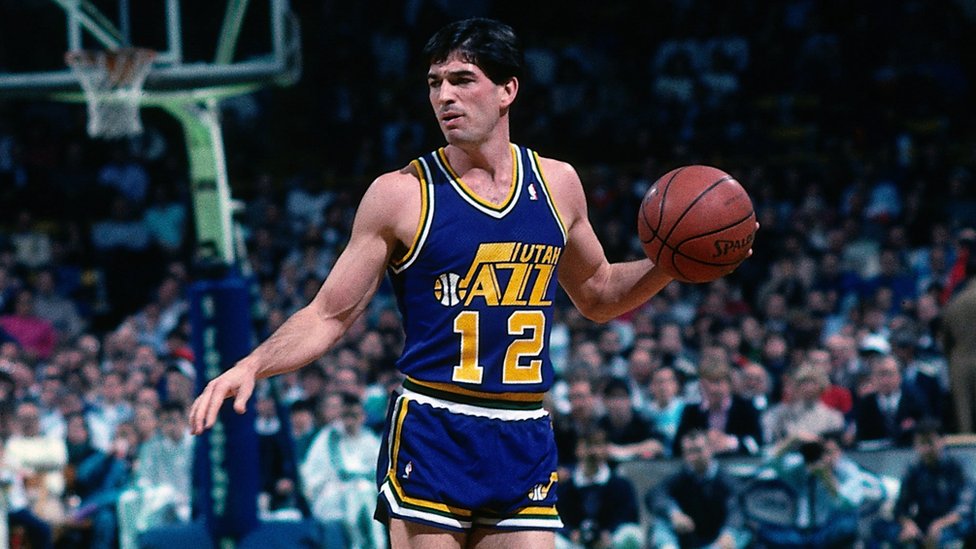
That Jason Kidd, Steve Nash, Magic Johnson, or Rajon Rondo type player that is truly a servant to the team philosophy rather than being the team philosophy themselves. As James Harden, one of these new-age point guards, once said, ‘I’m not a system player, I’m a system’ – which is the kind of idea that was alien during the reign of the pure point guard. They were tasked with carrying out the gameplan their coach set, not giving their coach a gameplan to refine.
But some of those quintessential point guard qualities seem to have been lost in the modern NBA and thus, that type of point guard is a dying breed. SGA, Brunson, Kyrie, and others like Anthony Edwards and Devin Booker have everything run through them, but now it is not because they have the Stockton-esque ability to run a basketball game, but simply because they are their team’s best perimeter player. In the modern NBA, if your best perimeter player is an off-guard or wing, you play them at the ‘point’. The Thunder do it with SGA, the Suns with Booker, the Timberwolves even do it with Anthony Edwards while having a prototypical point guard in Mike Conley on the team. The idea is that you don’t need a true point guard if you can get the ball in the hands of your best player from the jump. And then you can fill the floor with another wing or guard-type player instead of a traditional point guard. The Thunder for example have the luxury of running their embarrassment of guard-wing riches due to SGA’s ability to play ‘point guard’ – a topic I covered more in my article: Why Defense Wins Championships.
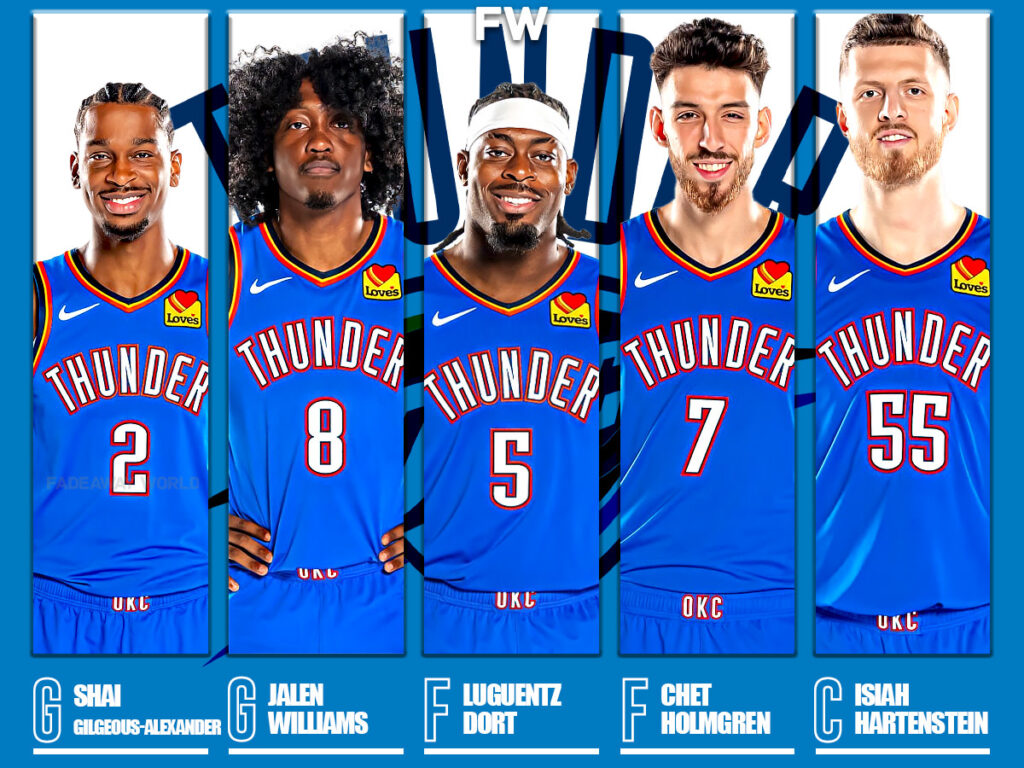
And in the modern NBA it makes sense. The players today are so incredibly skilled that they can almost do anything, and if they can’t they will eventually. SGA came into the league as an off-guard playing alongside more traditional point guards like Patrick Beverley and Chris Paul. But now he looks completely comfortable captaining the ship that is the Thunder offense. He might not be ensuring that every player is involved by demonstrating traditional point-guard qualities, but he doesn’t need to because he is just that good on his own. In this past season, he averaged 32.7 points per game on 51.9% shooting. Simply put, for the Thunder, if Shai can get to his spot on the floor for a shot, they will likely deem it a successful possession. So, why not give him the ball all the time? The same can be said for a lot of primary ball-handlers in the NBA today. They aren’t given the ball so often because they are elite floor generals, they are given the ball because they are the team’s best chance at getting a good shot. For the Thunder and Timberwolves, Shai and Edwards don’t need to be seeing backdoor cuts and off-ball actions if they can drive straight to the rim and either score or kick it out for and open 3-pointer. The days of ‘point guards’ racking up assists as a result of other-worldly court vision are pretty much over. These assists are a result of opposing teams having to commit so many defensive resources to stop these offensive monsters.
Harking back to the conversation with my colleague, I did mention that my ranking of Darius Garland may have been a bit overzealous as I realised that top-5 is not as clear-cut for Garland as I initially thought. LeBron James, Luka Doncic, Steph Curry, Cade Cunningham, and Trae Young are great examples of elite true point guards. LeBron, Luka, and Cunningham are what teams admire now – a taller hybrid-like guard that has an elite sense for the game as well as the stature to be potentially impactful on the other end. Curry and Young are a real dying breed of point guard. Their shooting tendencies are definitely in fashion but their abilities to marshal a game whilst being ‘undersized’ is what makes them impressive. Trae Young has never averaged less than 8.1 assists per game and has averaged 10.2, 10.8, and 11.6 in his last three seasons respectively. He is not the captain of his ship just because he is the best perimeter player, but because he naturally understands what it means to run an offense. He may also average 25.3 points per game for his career, but it is what he does as a true point guard that is so impressive.
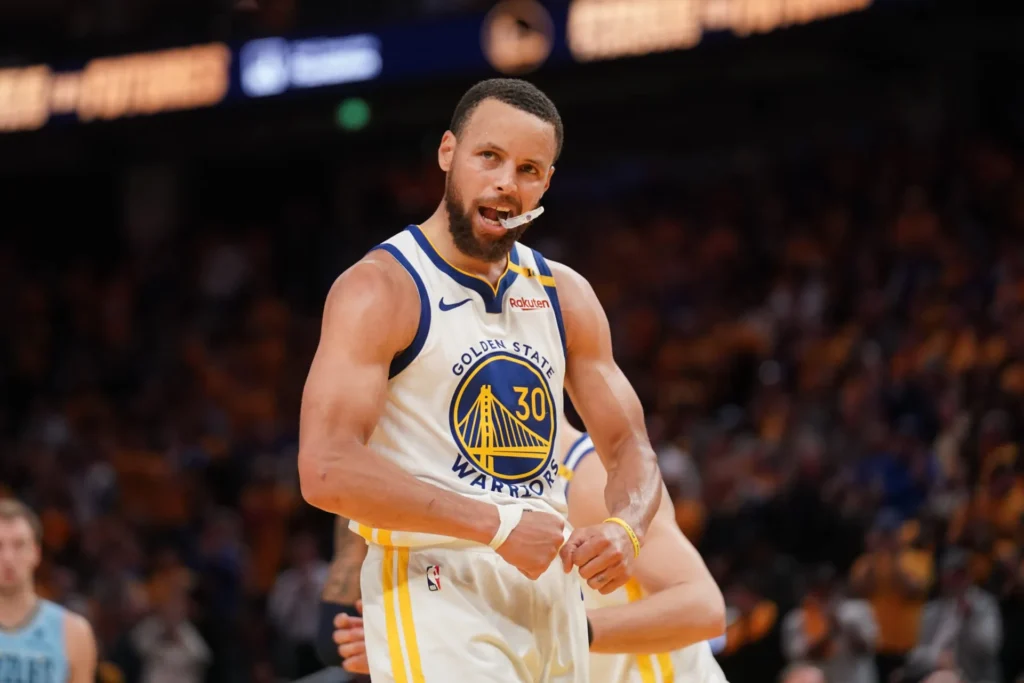
But assists are not all that make a point guard and Steph Curry is the best example of that. He averages 6.4 assists per game for his career and topped out at ‘only’ 8.5 in 2013-14 but he is so unique in his running of an offense that the numbers simply do not reflect his impact. He has found a way to leverage his unprecedented shooting abilities into running an offense without the ball. As LeBron once said Curry ‘is the only player who is most dangerous without the ball’. His gravity alone gives his teammates advantages that without him they wouldn’t ever see. In the same way that Stockton could manipulate defenses to make his teammates, Curry does the same – just without the ball.
It may be unfair to players like SGA, Kyrie, and Brunson to say they they aren’t really point guards but the proof is in the pudding. When these players have played with more traditional point guards (SGA w/ Chris Paul, Brunson w/ Luka and Kyrie w/ LeBron and Luka), they have been off-guards and excelled. This is because they are exceptional individual players, and scorers especially. In that off-guard position, they are perfectly positioned to utilise their best qualities. But the modern NBA has found a way to make the point guard position one that also utilises their best qualities. It may be in part because these off-guards are simply more skilled in today’s game and can now run the point, as well as be proficient off-ball, or maybe offensive schemes have found ways to minimise the need for a true floor general. Regardless, these kinds of players may be able to play play point guard in today’s game, but the questions remains: are they really point guards? I would argue not, but that may just be because I am working with an outdated definition of the term.




Are Liverpool trying to be like the Dodgers?