
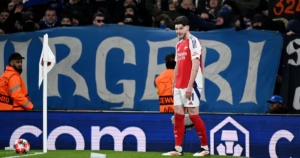

Have you noticed anything weird about the way football teams take their set pieces lately? If not, you’ve surely heard a lot about how important set pieces are becoming in football nowadays. Managers like Arne Slot and Mikel Arteta seem to be stressing the importance of scoring from, but also defending set pieces every single week.
As for noticing some weird tendencies about the nature of set pieces in football, that might come easier to fans of other sports like basketball, or even American football. Set pieces in football are becoming more and more like set plays and actions in those sports. A throw-in is all of a sudden looking a lot like a sideline out of bounds play, and corners are becoming more intricate and intentional in a similar manner.
Long gone are the days where teams just launch balls into the box from corners, or just throw the ball as far down the line as they can from a throw-in. In a world where football teams are becoming extremely efficient in every aspect of the game that they can think of, being intentional with set pieces is another part of the game that teams are purposefully trying to master.
But before I get into the set piece revolution, we should ascertain why you’d even want to run a set play from a set piece. Why take the time to teach your players the play, risk it not being executed well, or even think to implement one in the first place? Well quite simply, if you run a set play, you are preparing for a specific thing to happen and you can design plays to put your players in positions where they excel.
If you have a midfielder who excels when running away from defenders and into open space, why not design a play from a throw-in that allows them to do exactly that? Just like the Golden State Warriors design plays that allow Stephen Curry to run off of screens to generate space for him to take 3-pointers in rhythm, a football team may decide to design plays that get their players the ball in beneficial positions for them too.
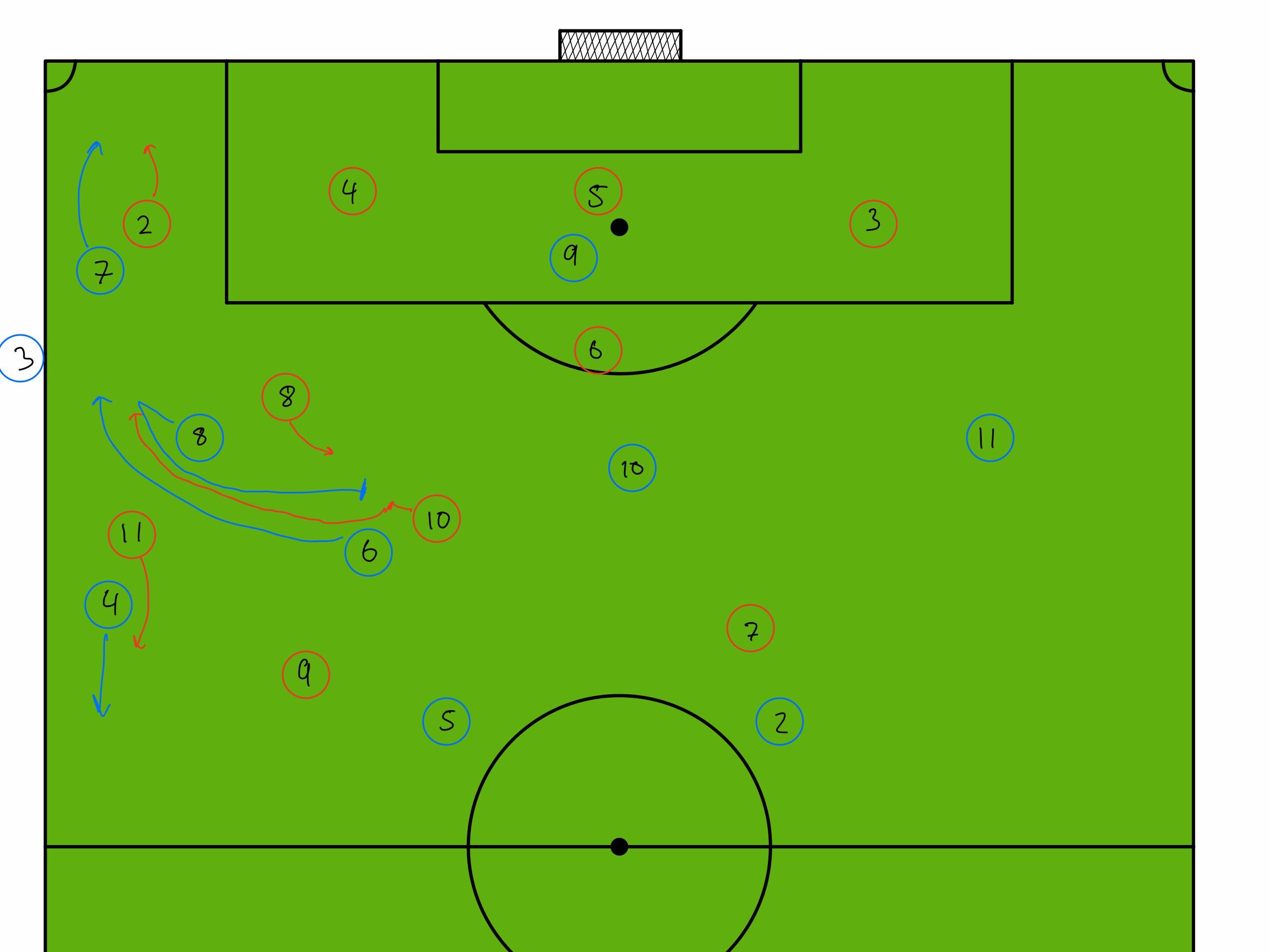
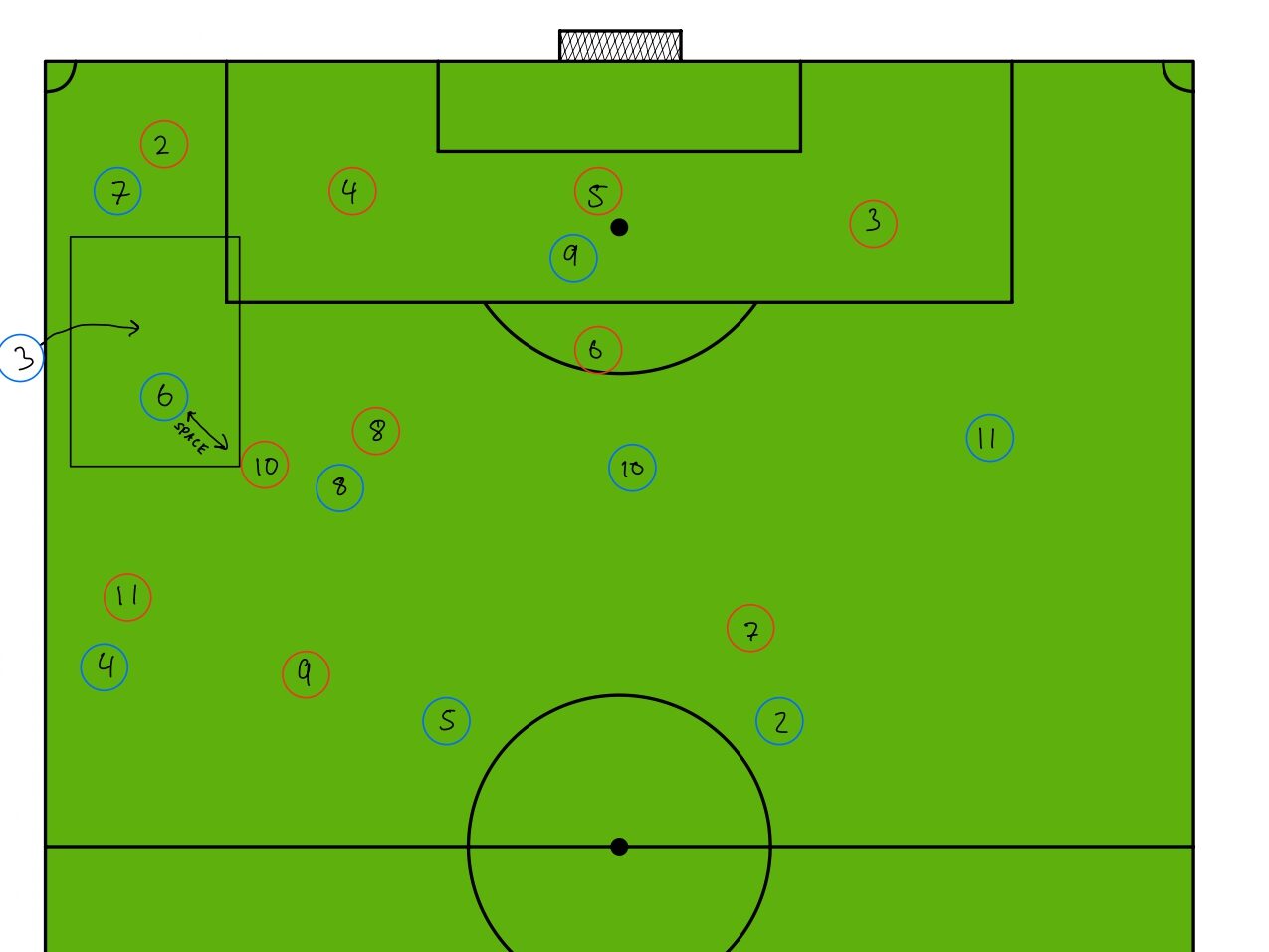
Above is a random play I just drew up that a team could run that frees up space for a midfielder to receive the ball while running into space that closely emulates a ‘pin down’ screen action in basketball.
And this is where the link between basketball and football becomes apparent. Plays in basketball are designed for a team to generate a specific shot, matchup, or situation. When Arsenal run one of their numerous corner set plays, they are designed to generate a specific shot, matchup, or situation. When William Saliba is tasked with impeding the goalkeeper on the side from which an in-swinger would come into his 6-yard box, it is to generate a situation where he cannot interfere with the play happening simultaneously. When he blocks the goalkeeper on his backside, it is to generate a situation where a corner played to the back post cannot be intercepted by the goalkeeper. Every block, screen, or interchange is designed to generate something.
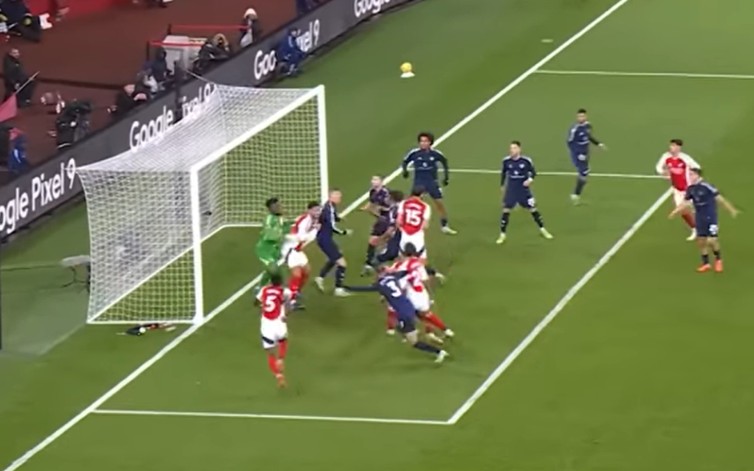
The Golden State Warriors can consistently rely on the fact that their set of plays will generate Stephen Curry 5-7 good 3-point shots per game. In the same way, if they are awarded corners, Arsenal can rely on their set of plays to generate 1 or 2 good opportunities for Gabriel to head the ball into the net. It is now on the remainder of teams to catch up and give themselves more reliable shots, matchups, and situations. And they are getting there.
One of the best examples of this set piece transition is Liverpool’s throw-in revolution that started all the way back in the summer of 2018.

In that summer, Liverpool hired a throw-in coach named Thomas Grønnemark, who had previously worked in the same or similar role for Ajax, RB Leipzig, Atlanta United, KAA Gent, and FC Midtylland. With that stint in Midtylland being the one that really put him and his ideas on the map, and enticing Jurgen Klopp enough to offer him a job at Liverpool.
Jurgen Klopp had identified a weakness in his exciting 2017-18 team – for all the attacking excitement and suffocating gegenpressing, his team was terrible at retaining possession from thow-ins. They ranked 18th out of 20 Premier League teams in 17-18, and he knew that something needed to change.
In the following season, Liverpool improved their retention of possession from throw-ins (when pressured) from 45.4% to 68.4%. An improvement that allowed them to rise from 18th in ball retention from throw-ins to 1st in the Premier League. They also ranked second in all of Europe in that metric. The only team ahead of them? The FC Midtylland team that Grønnemark had just left such a massive influence on.
But how does hiring a throw-in coach actually help a team improve their success when taking throw-ins? It sounds simple but what was it about Grønnemark that allowed his ideas to be so effective at Liverpool?
To put it simply, Grønnemark saw throw-ins as an integral part of football while almost everyone else treated it as a mere afterthought. That attention to detail and emphasis on this supposed ‘small margin’ are what allowed his teachings to have a profound impact.
He said in an interview with ESPN in 2020 that, ‘if you’re looking at the time spent on throw-ins or related situations, that’s 15 to 20 minutes of a game. If you’re calling that marginal – I would say you have misunderstood marginal’. And he’s right, if you think about how much time is spent with the ball out of play in football (over 40 minutes per game in the Premier League this season), you’d be a fool to think that getting the ball back into play well is not important.
To Grønnemark, ‘football fans will look at throws like they do in basketball – where they’re creating space for each other… when fans have that knowledge in football, they’ll find it more exciting’. And as much as he was talking about football fans gaining that knowledge, we are seeing that football teams and coaches are beginning to gain that knowledge. Of course the set piece coach is not new, and every team would have been practicing set pieces forever, but the level of intricacy and detail in each set piece nowadays is far greater than it used to be. Therefore, the set piece coach is far more important than they once were.
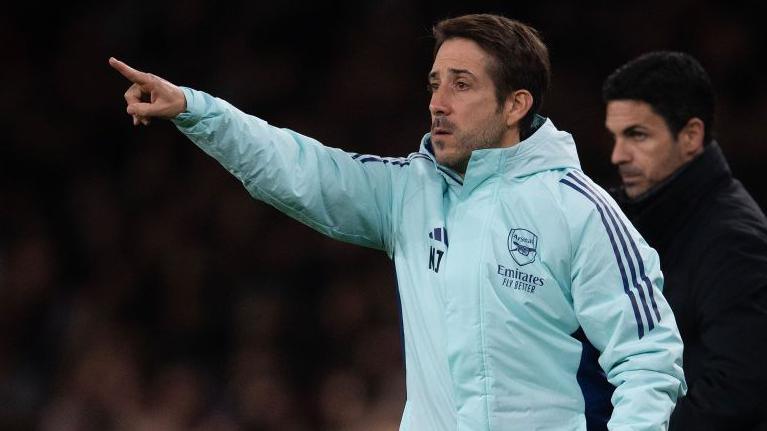
Maybe the most well-known (and deservedly so) set piece coach in world football today is Arsenal’s Nicolas Jover. His players are setting screens at throw-ins, blocking each other at corners, and creating space for one another just like Grønnemark alluded to. So, when I say that football is borrowing a lot from basketball, one look at what Jover is doing in North London will confirm that for any sceptics. And as a result, Arsenal have scored 37 goals from corners since the start of 2023/24 – 11 more than the next best team in any of Europe’s top 5 leagues.
For a basketball team, having a set of out of bounds plays is not just a nice addition – it is a necessity. You would struggle to find one amateur team that doesn’t have at least a few set plays for both baseline and sideline out of bounds plays. In fact, it’s where coaches really make their money. Whether it’s the play they call with 5 seconds left on the shot clock, or the play they call after they advance the ball with 5 seconds left in a Game 7 in the playoffs – the out of bounds play is absolutely integral to a basketball team.
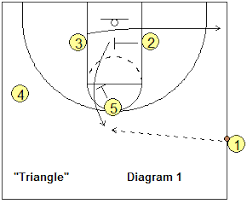
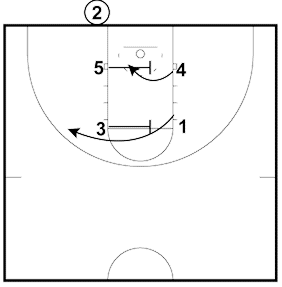
And although the possibilities for a for a football team to make a real impact from a set piece is much lower (given the distance to the goal primarily), a deep set of plays they can call in a set piece situation is becoming very important to a football team too.
In the 2025-26 Premier League season, the average ball in play time is down to just 55 minutes per game (via Opta) even though the average game length is up to 100 minutes. This is in part because teams are taking longer to resume play after a stoppage, with fans now spending 2 minutes and 50 seconds waiting for restarts throughout the game. But it is also because the number of throw-ins is up from 32.9 to 38.1 this season too; and there are 9.8 corners per game (via soccerstats.com) in the Premier League this season, marginally up from the 9.7 we saw last season (via fotmob).
So, if we look at the raw numbers, there are almost 48 throw-ins or corners in a given game. And for the sake of simplicity, we’ll say that each team gets 24 each. As a coach that is searching to maximise every aspect of the game, you would think that there would be a strong motivation to work on being intentional with these resumptions of play since they present an opportunity to have a level of control over proceedings that open play doesn’t always afford.
And there has been. In the 10 gameweeks we’ve had thus far, a whopping 30% of all goals have come from set-pieces. That is the second-highest proportion of any season in Premier League history, and up a colossal 8% from last season’s figure (22%). Quite simply, teams are focusing a lot more on set pieces than we’ve ever seen. Coaches such as Arsenal’s Nicolas Jover and former Liverpool throw-in coach Thomas Grønnemark are becoming important figures in football now as their influence is being felt around the league.
But there’s an even greater reason behind the importance of set pieces. There is something else, bigger than just the control you can have over them that makes them so valuable.
That is the fact that set pieces can totally change the state of a game.
I’m sure everyone can agree that being 1-0 up is very different to being 1-0 down; in fact being 1-0 up is very different to drawing 1-0. When you’re up a goal, you can play with more patience, more control, less risk. But being down a goal, there’s a greater pressure to gamble, to leave yourself vulnerable, to get yourself back into the game. Set pieces offer a chance to give yourself that cushion without giving up much in terms of vulnerability.
Let’s say you win a corner in the 5th minute of a game, and you don’t have any pre-designed plays. You may just lump it in the box and pray someone gets on the end of it. Sometimes you’ll score, but you’re very unlikely to. You don’t know where it’s going to go, whether your best aerial threat will even be close to the ball, or if you’ll even get a shot off. There are a lot of unknowns, and you’re probably not scoring. So, you continue the game at 0-0 and still have no advantage.
Now imagine that same team has a play designed to give their best aerial threat a chance to have a free header, or gives their best ball-striking midfielder a free shot on the edge of the box – that team is much more likely to score. They have controllable, predictable, and most importantly, favourable outcomes. If they capitalise on those conditions, they’re 1-0 up and now their opponents are chasing the game. For them, everything changes. They can take fewer risks, maintain possession is safer areas, and play more freely.
That is the power of the set piece – the ability to change the state of a game in a controllable manner.
For less talented teams, scoring from set pieces can give them opportunities to compete in games that, in open play, they are greatly outmatched in. And for better, more imposing teams, scoring from set-pieces can be the key to unlocking a low block, and subsequently opening the floodgates.
That is why Arne Slot has pointed to the lack of set piece goals in this season’s Liverpool team as a big reason behind their struggles. When they face tough low blocks, they are unable to force teams out of it by scoring from set pieces and changing the game state. Thus, they take more and more risks as they search for the key to unlock them, and as a result, they leave themselves more fragile on the other end. Their league losses to Crystal Palace, Brentford, and Manchester United are all great examples of that.
And in that same breath, it is why Arsenal have enjoyed seemingly inevitable success to begin the season. Their league leading 10 goals from set pieces have allowed them the freedom to be more secure defensively, while also forcing their opponents to take more risk themselves.
Ultimately, the set piece revolution is another example of football evolving and becoming more efficient and detail-obsessed. Whether it is the search for the best formation, the optimisation of each position, or now the intentionality behind set pieces, football is always evolving and there are more aspects of the game where teams can be better than their opponents. This time, the evolution borrows a lot from another popular sport and it doesn’t look like slowing down.





Are Liverpool trying to be like the Dodgers?