
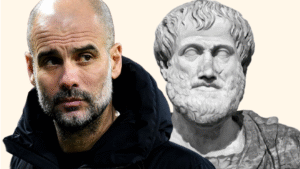

For a set of subject matters that seem, at face value to be so far apart – philosophy and sport have a plethora of overlappings. Maybe that’s only apparent to me because of my ties to them both, but I promise you they’re there.
One of these is the way that normative ethical theories closely represent the styles of play that some football managers implement with their teams.
Some managers place an emphasis on rules. They want their players to do certain things in certain positions, and adhere to a specific set of rules – these are the deontological managers.
Some managers place emphasis on their players doing the best possible thing for the team. There’s less emphasis on the formation, no rigid positions, and a freedom for the players to make their own decisions, just in case it brings about the best results for their team – these are the utilitarian managers.
Some managers place emphasis on the character of their players. They want their players to be passionate, have an unwavering commitment to the cause, and be willing workers – these are the virtue ethic managers.
And then there are the unicorns. The ones who place a relatively equal level of emphasis on each of those aspects of the game. The ones who give their players rules to follow, the ability to break those rules if it can help the team, and also expect a certain mental and physical commitment to the cause.
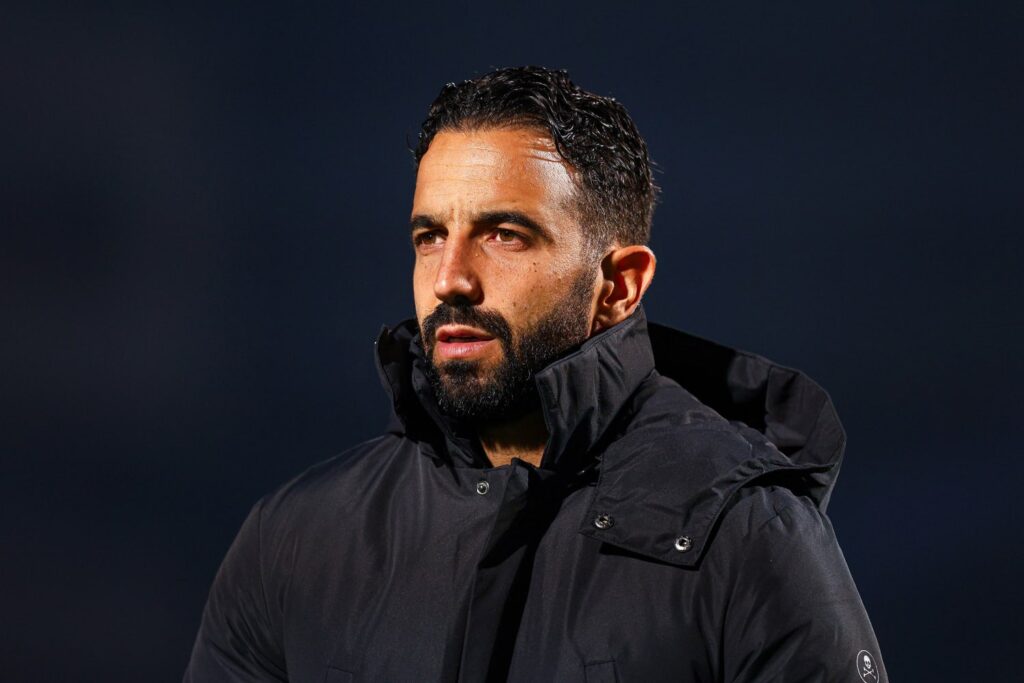
In philosophy, deontology is an ethical theory that judges the morality of an action based on rules, duties, and obligations, rather than the action’s consequences, emphasizing that some actions are inherently right or wrong. So, a deontological manager would be one like Ruben Amorim. Very rigid in his thinking, a back-three or nothing mentality. I mean, that way of thinking is part of why he lost his job. The board found him to be just a little to rigid for their liking.
This kind of manager is the one that wants their team to do certain things whenever they are in a certain situation. Play a long ball here, recycle possession there, make a third man run there. At the root of it, they want a level of control and predicability over the way their team plays. Not because they’re control freaks, but often because they truly think their way of thinking is the best way for a team to win a game of football.
This is often how many lower level and youth managers operate. They will have rules like, ‘never play across goal’, and ‘always play the way you’re facing’. This is usually because, at the level that they’re coaching, the players need these simple pieces of guidance or instructions to make the game easier for them.
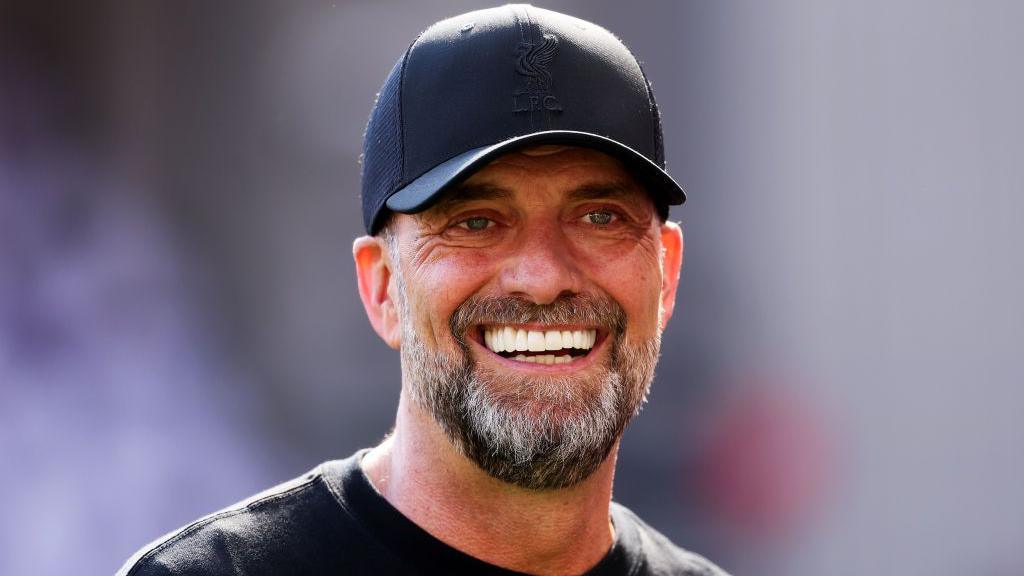
Utilitarianism is a moral theory, a form of consequentialism, that judges actions by their outcomes, aiming for the “greatest good for the greatest number,” meaning the most happiness and least suffering for all involved. So, a utilitarian manager would be one like Jurgen Klopp. Very free-flowing, very few rules, and a lack of care about who and how the team is helped – just a commitment to the team being helped. If Andy Robertson, a left back, felt like pressing the goalkeeper, he was allowed to do so. If Trent wanted to cross the ball 23 times in a game, he was allowed to do so. As long as the actions of the player were to serve the team, and promote the greatest success for the group on the whole, the utilitarian manager gives them license to do so.
This is the kind of manager that thrives when he is given the privilege of having elite and intelligent players. The type of players that don’t need much more than motivation and a sense of togetherness from their manager, that inspires them to use their abilities to help the team. With Klopp’s Liverpool, or Ancelotti’s Real Madrid, the sense of togetherness and desire to help each other was often overwhelming. Late comebacks spearheaded by players taking the initiative to make things happen themselves, a level of expression and expansive play that could only exist in an environment where the manager has full faith in them to decide how they can best promote the success of the team.
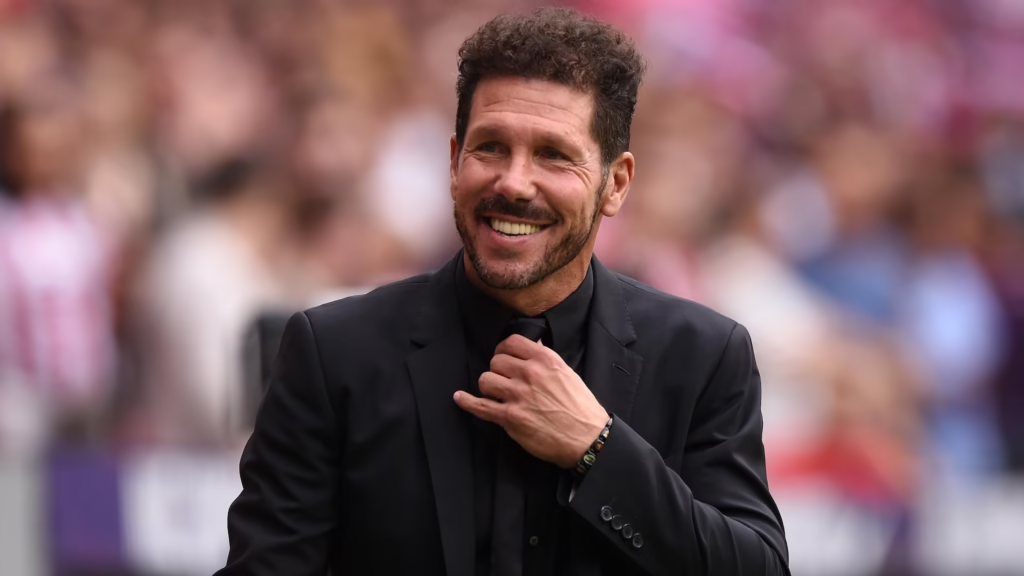
Virtue ethics is a character-focused moral theory, originating with Aristotle, that centers on developing virtuous traits like honesty, courage, and wisdom. So, a virtue ethic manager would be one like Diego Simeone. One that appreciates the dirty work, work that you would only do if you had an unwavering commitment to the cause. Doing a full recovery sprint when the opposition is countering from your corner, tracking a runner for 40 yards, putting your body on the line to prevent a goal. These are the kinds of actions that virtue ethic managers put at the top of their priority lists.
This is the type of manager that doesn’t look for the greatest individual football players. Instead, they look for the player they can trust to sacrifice everything for the badge. When the going gets tough, a team managed by a virtue ethic manager can pick up decisive, season-defining results on the back of effort alone. A last minute winner in the 95th minute from a corner, a game-saving goal-line clearance when a goal was all but guaranteed. These are the actions that the virtue ethic manager values far more than a player who can dance past 5, or follow instructions to a tee.
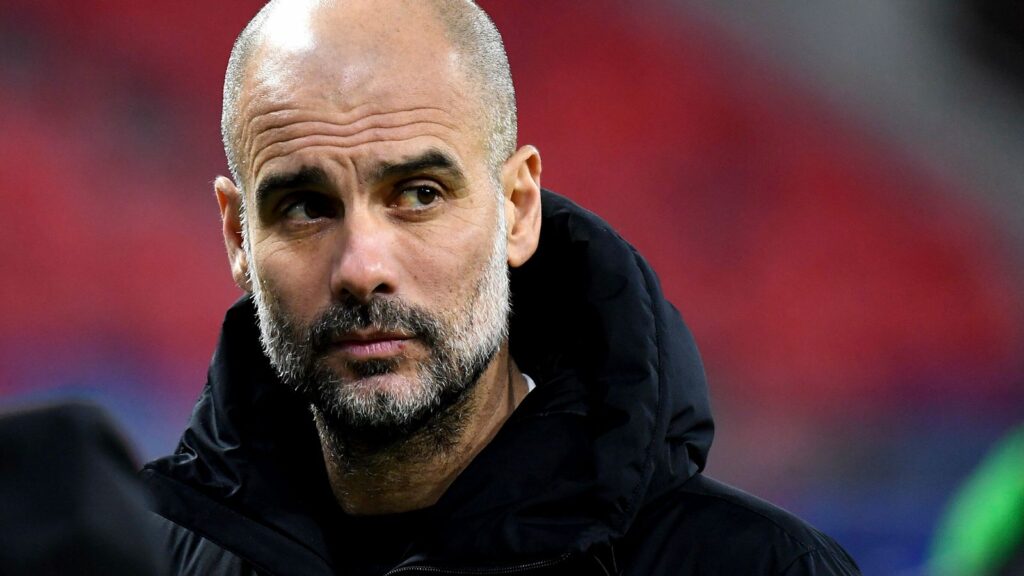
But then there are managers who seem to have the perfect blend of all three. They have a set of rules that are intelligent enough for players to buy in to. But they give their players the license to break those rules to go and do what they think will help the team the most. And they also value the intangible, character-based actions that are often the backbone of a team.
This what Pep Guardiola is. Sure, he has a possession-heavy, positional style of play that have some key rules. But if Jeremy Doku wants to take his defender on 1-on-1 to try and create a chance to score, he is given license to break the rule that might say he’s obliged to recycle possession in that situation. And when Ruben Dias lays out to block a shot, that has beaten Gianluigi Donnarumma and is destined for goal, Pep seems to know how to really appreciate that effort, and build a team of those kinds of players as a result. He is the true managerial unicorn.
Now I’m sure that all managers want to be like Pep and implement all of these managerial traits together seamlessly, but none do it quite like him. But that need not be an indictment. Jurgen Klopp won every trophy he could possibly win as a primarily utilitarian manager. Diego Simeone has taken his virtue ethic approach to a LaLiga trophy and multiple Champions League finals. Even Ruben Amorim achieved great success as a deontological manager when he was in charge at Sporting. You don’t need to be like Pep to be successful, but it would definitely help.
In conclusion, there is a lot you can take from philosophy that explains why certain managers are the way they are, and if we’re ever struggling to explain something in sports, we might just want to turn to it to give us the answer.






How The Athletic are consistently ‘ahead of the curve’