


This article marks the beginning of a little period in which I’m going to try and write about topics that I’m not all too familiar with. I asked some of my followers on social media to give me some suggestions, and we’ll be starting with cricket.
Briefly, I have always liked cricket. I played a lot at high school, and always respected those who were truly good at it because I sure wasn’t. I couldn’t bowl, but I could field, and if I actually made contact while batting, the ball could go pretty far.
Ironically, that last aspect of my game is pretty much how England have been playing cricket ever since Brendon McCullum took over as Test Head Coach in 2022. The style of play that he implemented when he took over has been a topic of great discussion, and has been given the now-famous nickname ‘Bazball’.

Bazball refers to the approach McCullum has implemented whereby players make aggressive decisions both when batting and fielding, that will hopefully lead to decisive moments that help England win games. The key word here is ‘hopefully’ and I’ll return to that shortly.
The origins of the Bazball mindset are said to have come about after the tragic passing of Australian cricketer Phillip Hughes in 2014, which had a profound impact on then New Zealand captain McCullum. He said in 2016, when talking about playing after Hughes’ passing, that ‘we knew we had to play and we’d do the best we could pretty much just to honour Phil. The outcome of the uncaring, no consequence play was a revelation […] the perspective changed completely for the rest of my time playing test cricket for New Zealand, and we were a much better side as a result’.
And he was right, they were a much better side, as they made the 2015 Cricket World Cup final; something they had never done before. So, it’s safe to say that this is where McCullum bought into what we now call Bazball.

But what may have worked for the New Zealand team back in McCullum’s playing days, has had mixed results for the England team that is now the Head Coach of.
The weird thing about Bazball, is that it is a strategy used in test cricket even though test cricket is typically very boring and mundane. That is because tests are played over 3-5 days, so challenge players to be more polished and refined in their strategies. It sometimes resembles a slow, untimed game of chess.
Bazball challenges that status quo, opting to try and overwhelm the opposition by simply scoring an unbelievable amount of runs. Forget the meticulous planning and strategy; just hit the ball to the rope.
In the Ashes this year, we saw just how flawed Bazball can be in the test setting. England lost the series 4-1, but were initially whitewashed 3-0, with the final two tests just a formality.
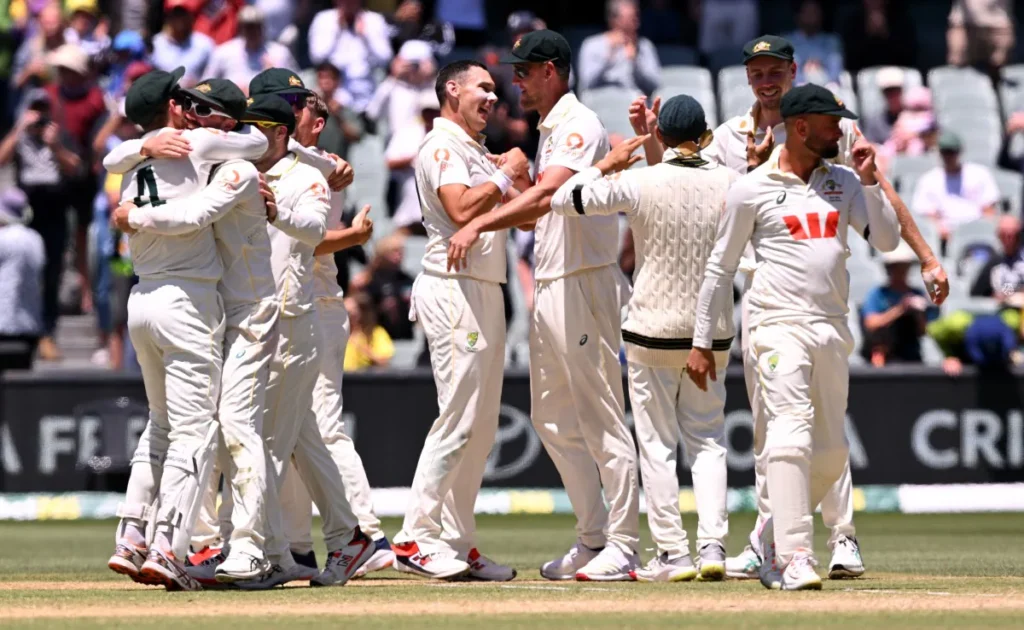
In fact, the fourth test, which England won (played Dec 26th-27th), took just two days to complete as both teams looked like they had Christmas hangovers, and just wanted to get the whole thing over with as quickly as possible. Only 142 overs were bowled during the match with Australia putting up 152 & 132, and England scoring 110 & 178/6 to win the test.
Now when you consider that Joe Root and Travis Head both eclipsed 160 in the fifth and final test, you realise just how strange that fourth one was.
But when there was still an Ashes urn to play for, we saw that Bazball is the kind of approach to test cricket that requires almost perfect circumstances to produce consistent victories. Even though their approach places a great emphasis on increasing their run rate by increasing their boundary count, England were outscored 2649-2545, and lost two tests by 8 wickets each. In other words, England were absolutely dominated.
The bats didn’t show up in the way that McCullum’s approach requires them to. Due to the heavy emphasis placed on batting, and subsequent lack thereof with bowling and fielding, we saw those more fundamental and, in some ways, boring aspects of the game let England down time after time. The second test in particular featured an incredible amount of dropped catches, and without them we could have easily seen England win that test.
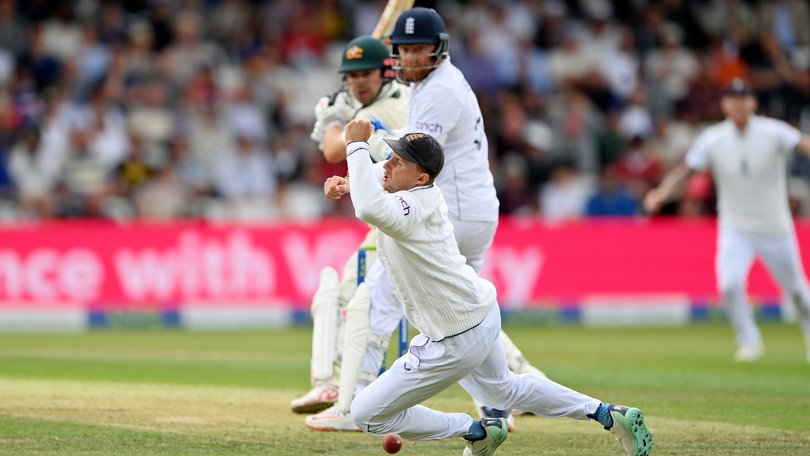
Winning the second test could have drastically changed the outcome of the series as it would have obviously instilled a level of confidence in the England team that they didn’t have until it was far too late. And even winning that fourth test in the manner they did can’t have been the most inspiring since they weren’t prolific with the bats there either.
To make matters worse, it was revealed that England didn’t even have a fielding coach for this Ashes series. McCullum stated that it was because those coaches ‘get paid more elsewhere’, but it really says a lot about how he, and England feel about the fundamentals of cricket. They could probably have found someone to be a fielding coach that would’ve done the work for free – it is the England national team we’re talking about here.
But that is the problem with Bazball. The margin for error with the batsmen is so thin because the entire gameplan is to hope that they can be so potent offensively, that they can smooth over any deficiencies in the other aspects of the game. And that is why I said I’d return to the word ‘hopefully’ earlier.
In test cricket, because the games are so much longer than a T20 (one day, 20 over game) or ODI (one-day international), the opportunities for your deficiencies in bowling and fielding have much more time to show themselves. Hoping that your bats can be so powerful to cover that up in a 5-test series is pretty wishful thinking.
So, Bazball is the kind of strategy that I can imagine would be very effective in arenas like T20 and ODIs, but this year’s Ashes told us that it isn’t exactly fit for test cricket, and there’s nothing wrong with that. Different styles of play belong in different types of cricket settings, so we can’t knock McCullum and England for trying to do something a little different.






Is Reece James being phased out of football?